
Box Breathing for Anxiety: A Simple Practice to Calm the Mind
Anxiety often shows up in the body before we fully notice it in the mind. The breath becomes shallow, the chest tightens, and thoughts begin to race. In these moments, one of the simplest ways to bring the nervous system back into balance is through intentional breathing.
Box breathing is a gentle, structured breathing technique that helps slow the body down and create a sense of calm.
What Is Box Breathing?
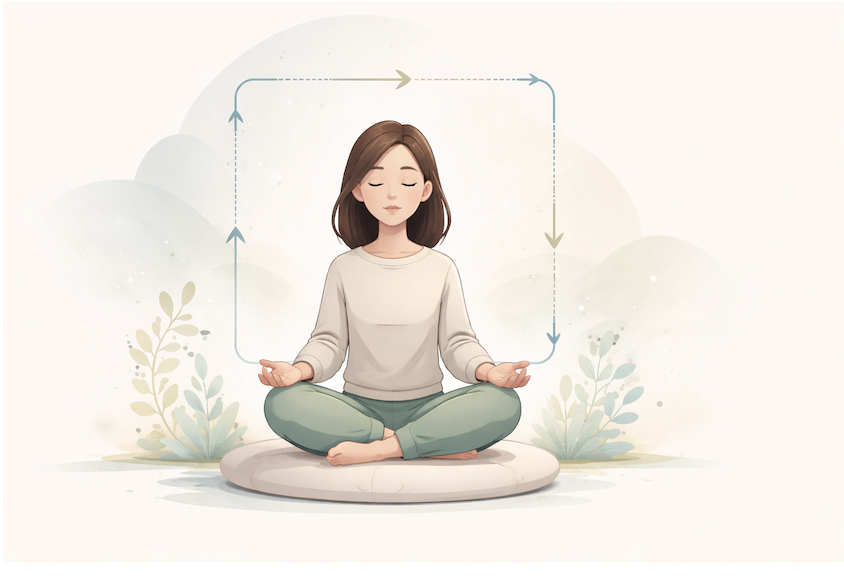
Box breathing, also known as square breathing, is a method where each part of the breath is given equal length. The practice follows four simple steps:
- Inhale slowly
- Hold the breath
- Exhale slowly
- Pause before the next inhale
Each step is typically counted for four seconds, forming the shape of a box.
How Box Breathing Helps Anxiety
Anxiety activates the body’s stress response, often referred to as “fight or flight.” Box breathing works by signaling safety to the nervous system.
This practice helps by:
- Slowing the heart rate
- Reducing muscle tension
- Bringing attention away from racing thoughts
- Encouraging a steady breathing rhythm
By focusing on the breath, the mind is gently guided out of anxious loops and into the present moment.
How to Practice Box Breathing
You can practice box breathing anywhere — sitting, standing, or lying down.
- Inhale through your nose for four counts
- Hold the breath gently for four counts
- Exhale through your mouth for four counts
- Pause with empty lungs for four counts
Repeat this cycle for 3–5 minutes, or until you notice a sense of calm returning.
When to Use Box Breathing
Box breathing can be helpful in many situations:
- During moments of stress or overwhelm
- Before an important conversation or task
- When anxiety begins to rise unexpectedly
- As part of a daily calming routine
With regular practice, it becomes easier to access calm more quickly.
Tips for Beginners
- Keep the breath soft, not forced
- Reduce the count if four seconds feels too long
- Focus on the sensation of air moving in and out
- Practice consistently, even when you feel calm
There is no “perfect” way to breathe — the goal is gentle awareness.
Making It a Daily Habit
Even a few minutes of box breathing each day can support emotional balance over time. Practicing during calm moments trains the body to respond more effectively during stressful ones.
Consistency matters more than duration.
Final Thought
Anxiety may not disappear instantly, but box breathing offers a steady anchor when the mind feels unsettled. By returning to the breath, you remind the body that it is safe in this moment.
Sometimes, calm begins with just one breath.