
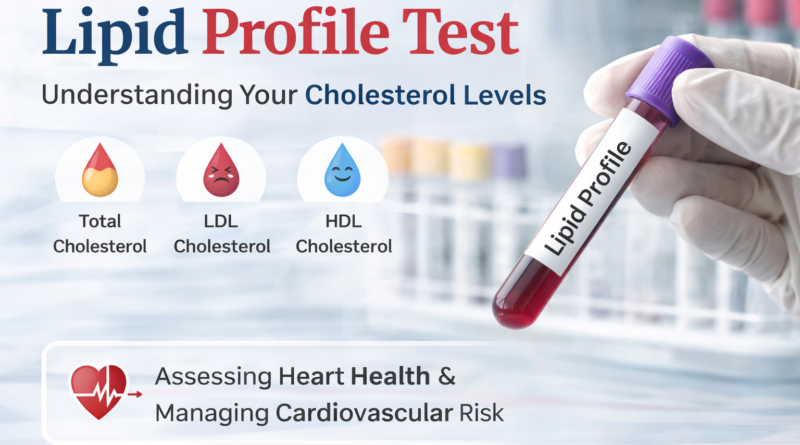
Lipid Profile Test: Understanding Your Cholesterol and Lipid Levels
A lipid profile test is a blood test used to measure the levels of various types of lipids (fats) in your blood. These include cholesterol and triglycerides, which are crucial in assessing your risk of heart disease, stroke, and other cardiovascular conditions. Understanding the results of a lipid profile can provide key insights into your heart health and help guide your lifestyle and treatment choices.
What Does a Lipid Profile Test Measure?
A lipid profile test measures several important markers related to fat metabolism:
- Total Cholesterol
This is the overall amount of cholesterol in your blood, including both good and bad cholesterol. High total cholesterol can increase your risk of cardiovascular diseases. - Low-Density Lipoprotein (LDL) Cholesterol
LDL is often referred to as “bad cholesterol.” High levels of LDL can lead to plaque buildup in your arteries, increasing the risk of heart attack and stroke. It’s important to keep LDL levels low. - High-Density Lipoprotein (HDL) Cholesterol
HDL is known as “good cholesterol.” It helps remove LDL cholesterol from your bloodstream, lowering the risk of heart disease. Higher HDL levels are generally better for your heart health. - Triglycerides
Triglycerides are a type of fat found in your blood. Elevated triglyceride levels can increase your risk of heart disease and may be linked to conditions like obesity, diabetes, and metabolic syndrome. - Very Low-Density Lipoprotein (VLDL) Cholesterol
VLDL is another type of “bad” cholesterol that is often considered alongside LDL cholesterol. It is involved in the process of fat storage and can contribute to plaque buildup in the arteries.
Why Is a Lipid Profile Test Important?
A lipid profile test provides valuable information that can help prevent heart disease. By assessing your levels of LDL, HDL, and triglycerides, your doctor can determine if you’re at an increased risk for cardiovascular issues. Early detection of abnormal lipid levels allows for proactive management through lifestyle changes or medication.
- Assessing Heart Health: Elevated LDL cholesterol and triglycerides are key risk factors for heart disease and stroke. By monitoring these levels, your healthcare provider can evaluate your heart health and recommend preventive measures.
- Guiding Treatment: If your lipid profile indicates that your cholesterol or triglyceride levels are out of balance, your doctor may prescribe medication or suggest lifestyle changes like diet modification, exercise, and weight management.
- Monitoring Progress: If you’re already taking medication to manage cholesterol or triglyceride levels, a lipid profile test can help track the effectiveness of the treatment and ensure your levels remain under control.
Who Should Get a Lipid Profile Test?
The American Heart Association recommends that all adults aged 20 and older should have their cholesterol levels checked every four to six years. However, if you have a family history of heart disease, diabetes, or high cholesterol, you may need to have your lipid profile tested more frequently. People with the following risk factors should also consider getting a lipid profile test:
- Family history of heart disease or high cholesterol
- Age (men over 45 and women over 55)
- High blood pressure
- Smoking or excessive alcohol consumption
- Overweight or obese
- Diabetes or prediabetes
How to Prepare for a Lipid Profile Test
A lipid profile test requires a blood sample, typically drawn from a vein in your arm. For accurate results, you may be asked to fast for 9-12 hours before the test. During this time, you should avoid eating or drinking anything except water. Be sure to follow your healthcare provider’s instructions to ensure the test results are as accurate as possible.
Interpreting the Results
The results of your lipid profile will be reported in milligrams per deciliter (mg/dL). Here’s what the results typically mean:
- Total Cholesterol: A level below 200 mg/dL is considered normal. A total cholesterol level above 240 mg/dL is considered high.
- LDL Cholesterol: Ideal levels are less than 100 mg/dL. Levels between 100-129 mg/dL are borderline high, while anything above 160 mg/dL is considered high.
- HDL Cholesterol: Higher levels are better, with a goal of 60 mg/dL or higher being optimal. Levels below 40 mg/dL in men and 50 mg/dL in women are considered low.
- Triglycerides: A normal level is below 150 mg/dL. Levels above 200 mg/dL are considered high and may increase your risk for heart disease.
Conclusion
A lipid profile test is a valuable tool in assessing your risk of cardiovascular disease and guiding appropriate treatment. By regularly monitoring your cholesterol and triglyceride levels, you can take proactive steps to protect your heart and overall health. If you’re due for a test, talk to your healthcare provider about scheduling one. The earlier you catch potential issues, the better equipped you’ll be to manage your health and reduce your risk of serious conditions down the road.