
Weather New Delhi: Current Climate, Seasonal Trends, and Best Time to Visit
New Delhi, the capital of India, experiences diverse weather conditions throughout the year due to its geographical location in northern India. From extremely hot summers to cool winters and refreshing monsoon rains, the weather in New Delhi changes significantly across seasons.
Understanding New Delhi’s climate patterns can help residents, tourists, and travelers plan their activities more effectively.
Current Weather Conditions in New Delhi
The weather in New Delhi can vary widely depending on the time of year. Summers often bring high temperatures and dry winds, while winters are cooler with occasional fog. Monsoon months bring moderate rainfall, helping reduce the intense heat.
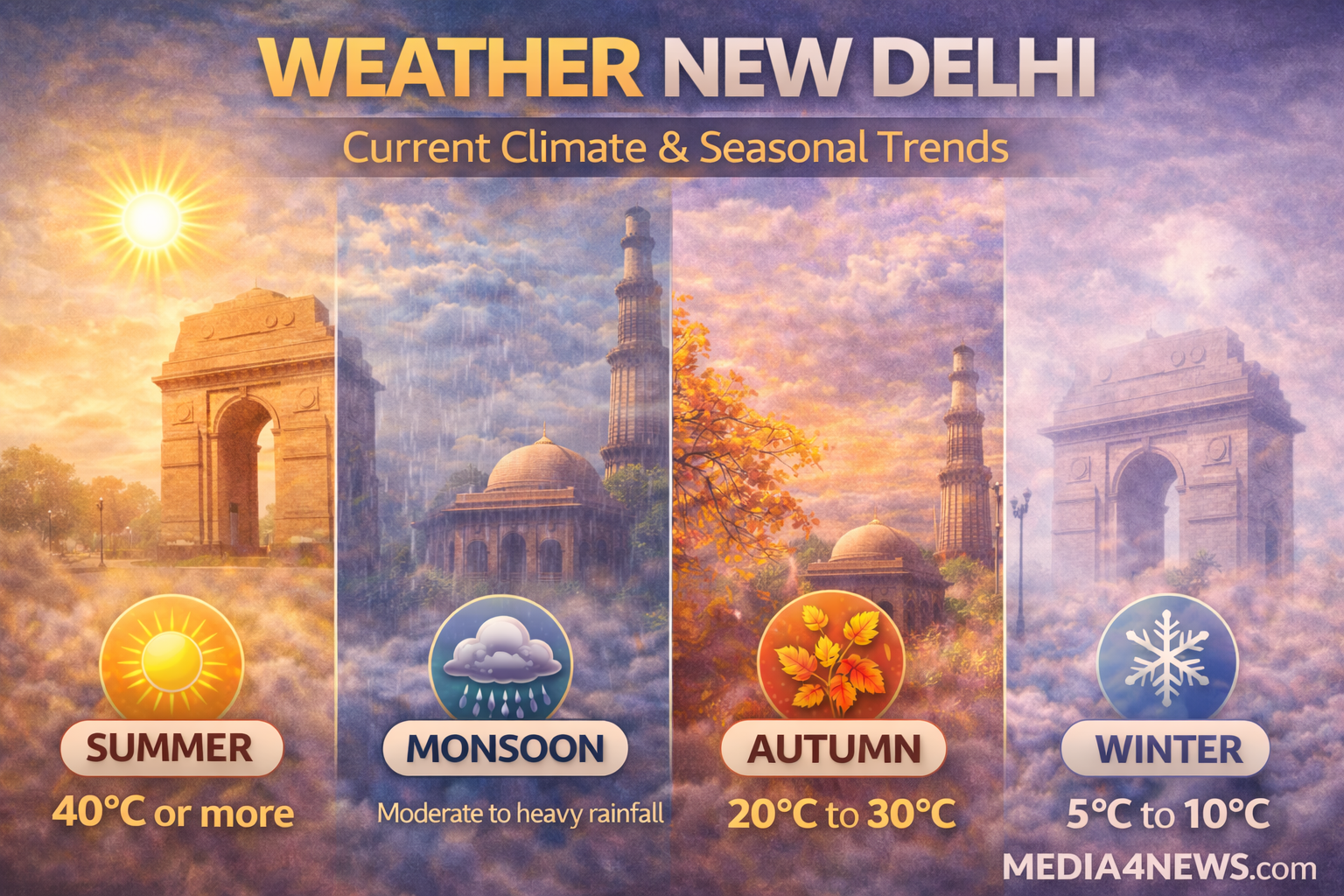
During warmer months, temperatures can rise above 40°C, while winter temperatures may drop to around 5°C to 10°C during cold waves.
New Delhi Weather by Season
Summer Season (April to June)
Summer in New Delhi is known for its extreme heat. Temperatures often exceed 40°C, especially during May and June.
Common characteristics of Delhi summers include:
- Hot and dry winds known as “loo”
- Very low humidity
- Clear skies and intense sunshine
Residents usually prefer staying indoors during peak afternoon hours due to the intense heat.
Monsoon Season (July to September)
The monsoon season brings relief from the scorching heat. Rainfall during this time cools down the city and improves air quality.
Typical monsoon features include:
- Moderate to heavy rainfall
- Increased humidity
- Occasional thunderstorms
Although the rains bring relief, they can sometimes lead to waterlogging in certain parts of the city.
Autumn Season (October to November)
Autumn is considered one of the most pleasant seasons in New Delhi. The weather becomes cooler and comfortable, making it ideal for outdoor activities.
Temperatures generally range between 20°C and 30°C, with clear skies and mild breezes.
However, air pollution levels may increase during this period due to crop burning in nearby states.
Winter Season (December to February)
Winters in New Delhi can be chilly, especially during December and January.
Common winter characteristics include:
- Temperatures dropping to 5°C–10°C
- Dense morning fog
- Cool winds and shorter days
Although snowfall does not occur in the city, nearby hill stations like Shimla and Manali receive snow during this season.
Factors Affecting New Delhi Weather
Several environmental and geographical factors influence Delhi’s weather patterns:
Himalayan proximity: Cold winds from the north influence winter temperatures.
Urban heat effect: Heavy urbanization increases summer heat levels.
Monsoon winds: Seasonal winds from the Arabian Sea bring rainfall.
Best Time to Visit New Delhi
The most comfortable months to visit New Delhi are October to March, when the weather remains pleasant and suitable for sightseeing.
During this period, tourists can explore major attractions such as:
- India Gate
- Red Fort
- Qutub Minar
- Lotus Temple
- Humayun’s Tomb
The cooler temperatures make it easier to enjoy outdoor activities and cultural experiences.
Importance of Weather Updates
Checking weather updates in New Delhi is important for both residents and travelers. Weather conditions can affect daily commuting, travel plans, and outdoor events.
Regularly monitoring forecasts helps people prepare for heatwaves, rainfall, or fog conditions that may impact visibility and transportation.
Conclusion
The weather in New Delhi varies significantly across seasons, offering a mix of hot summers, rainy monsoons, pleasant autumn days, and cool winters. Understanding these seasonal changes can help people plan their travel, daily routines, and activities more effectively.
Whether you are a tourist planning a visit or a resident keeping track of weather updates, staying informed about New Delhi’s climate conditions is always beneficial.