
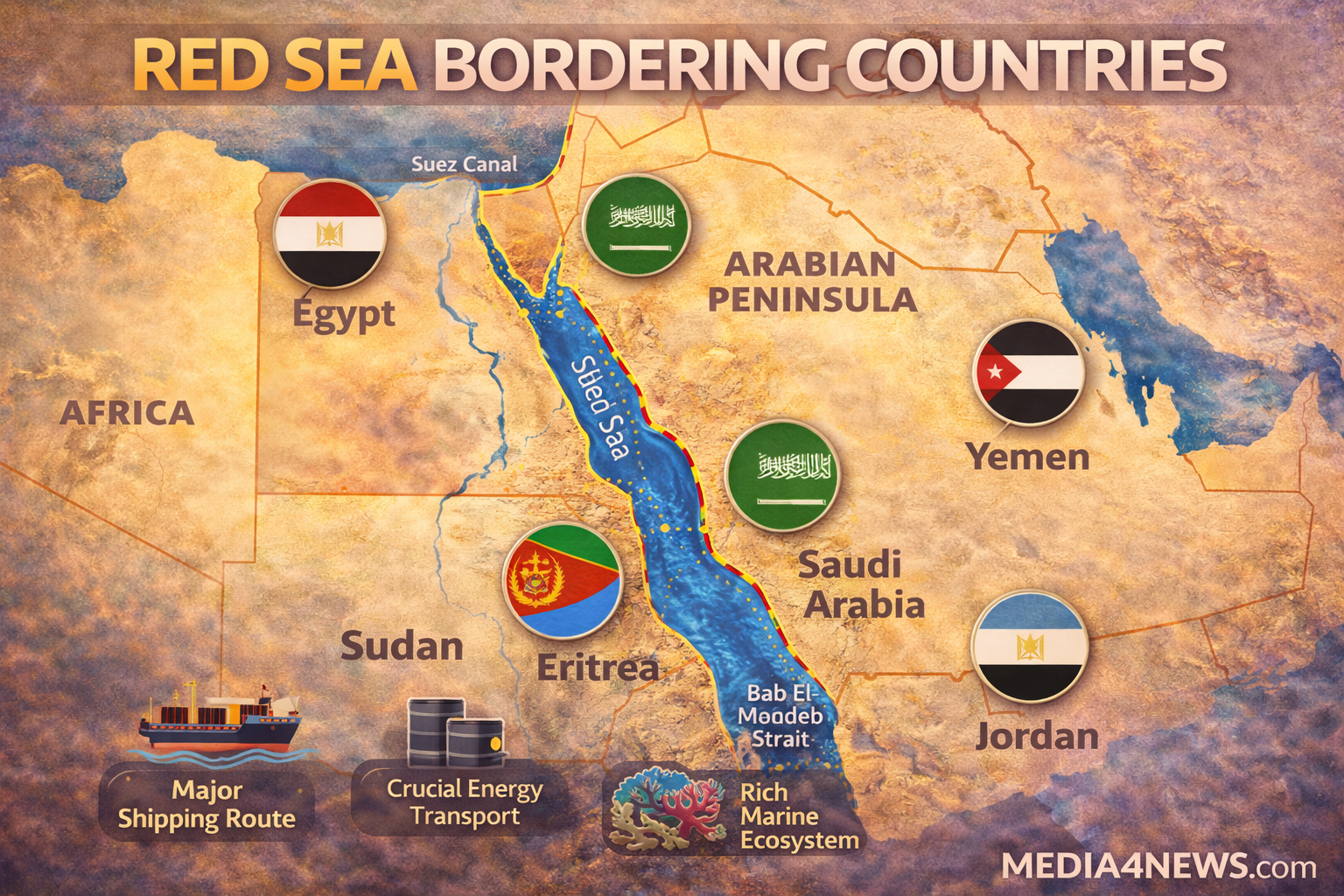
Red Sea Bordering Countries: Nations That Share the Red Sea Coastline
The Red Sea is one of the most important waterways in the world, connecting the Mediterranean Sea to the Indian Ocean through the Suez Canal and the Gulf of Aden. Known for its rich marine biodiversity, strategic shipping routes, and historical significance, the Red Sea borders several countries across Africa and the Middle East.
Understanding the countries that border the Red Sea helps explain its geopolitical importance and its role in global trade and transportation.
Where Is the Red Sea Located?
The Red Sea lies between Africa and the Arabian Peninsula. It stretches about 2,250 kilometers from the Suez Canal in the north to the Bab el-Mandeb Strait in the south, where it connects to the Gulf of Aden and eventually the Arabian Sea.
Because of its location, the Red Sea is considered one of the busiest maritime routes for global shipping and energy transport.
Red Sea Bordering Countries
There are six countries that border the Red Sea directly. These nations are divided between the African continent and the Arabian Peninsula.
Countries on the African Coast
Egypt
Egypt controls the northern entrance of the Red Sea through the Suez Canal, one of the most critical trade routes in the world. Egyptian coastal cities like Hurghada and Sharm El-Sheikh are also major tourist destinations known for coral reefs and diving.
Sudan
Sudan occupies a significant portion of the Red Sea’s western coastline. The port city of Port Sudan serves as the country’s main maritime gateway and plays a vital role in Sudan’s trade and shipping activities.
Eritrea
Eritrea has a long Red Sea coastline and also controls several islands in the sea, including the Dahlak Archipelago. The Red Sea is extremely important to Eritrea’s fishing industry and maritime economy.
Countries on the Arabian Peninsula
Saudi Arabia
Saudi Arabia has the longest Red Sea coastline among the bordering countries. Major cities such as Jeddah and Yanbu serve as important ports and economic hubs. The Red Sea coast is also part of Saudi Arabia’s ambitious tourism project known as The Red Sea Project.
Yemen
Yemen lies near the southern entrance of the Red Sea close to the Bab el-Mandeb Strait, one of the world’s most strategic shipping chokepoints. This narrow passage is crucial for oil and cargo shipments moving between Europe and Asia.
Jordan
Jordan has a short coastline along the Red Sea at the city of Aqaba. Despite its limited coastline, Aqaba is Jordan’s only seaport and plays a major role in the country’s trade and tourism.
Strategic Importance of the Red Sea
The Red Sea is extremely important for global trade and geopolitics for several reasons:
Global shipping route: It connects Europe, Asia, and Africa through the Suez Canal.
Energy transportation: A large percentage of the world’s oil shipments pass through this region.
Military significance: Several countries maintain naval presence in the Red Sea due to its strategic importance.
Tourism and marine biodiversity: The Red Sea is famous for coral reefs, diving destinations, and marine life.
Environmental Importance
The Red Sea is known for its unique marine ecosystem, including coral reefs that are among the most resilient in the world. Many coastal countries depend on the sea for fishing, tourism, and ecological conservation.
Protecting the Red Sea environment has become an important issue as shipping activity and coastal development continue to increase.
Conclusion
The Red Sea bordering countries include Egypt, Sudan, Eritrea, Saudi Arabia, Yemen, and Jordan. Each of these nations plays a role in the region’s trade, security, and environmental management.
Because of its strategic location and economic importance, the Red Sea remains one of the most significant waterways in global geopolitics and international commerce