
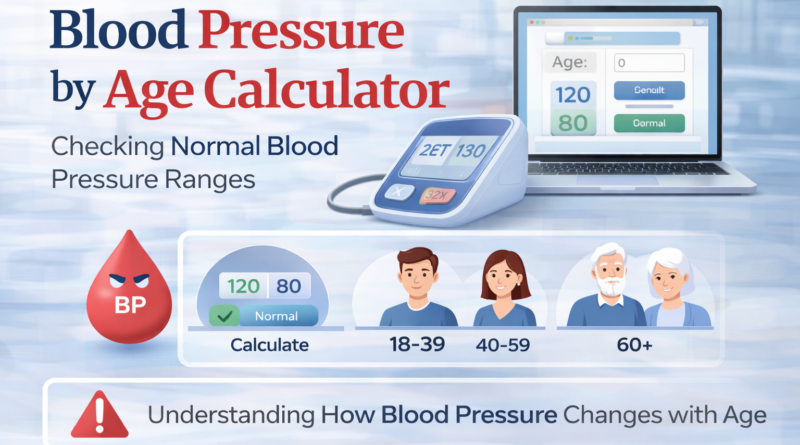
Blood Pressure by Age Calculator: Understanding Your Blood Pressure Ranges
Blood pressure is one of the most important metrics in evaluating your overall health. It provides valuable insight into the condition of your heart and blood vessels. Knowing what constitutes a normal blood pressure range for your age is crucial, as blood pressure can vary across different age groups. The blood pressure by age calculator is a helpful tool that allows individuals to track and understand their blood pressure levels based on their age, providing better clarity for managing their heart health.
What Is Blood Pressure?
Blood pressure refers to the force of your blood against the walls of your arteries. It’s measured in millimeters of mercury (mmHg) and is recorded with two numbers:
- Systolic pressure (the top number): The pressure in your arteries when your heart beats and pumps blood.
- Diastolic pressure (the bottom number): The pressure in your arteries when your heart rests between beats.
For example, a normal blood pressure reading may be 120/80 mmHg, where:
- 120 is the systolic pressure.
- 80 is the diastolic pressure.
How Blood Pressure Changes With Age
Blood pressure can naturally change over time. As we age, the arteries become stiffer, and the heart has to work harder to pump blood. This can cause blood pressure to rise, making it crucial to monitor blood pressure levels regularly, especially as you grow older.
Here’s a general overview of what is considered normal blood pressure for various age groups:
For Adults (18-39 years):
- Normal: Less than 120/80 mmHg
- Elevated: 120-129 systolic and less than 80 diastolic
- Hypertension Stage 1: 130-139 systolic or 80-89 diastolic
- Hypertension Stage 2: 140 or higher systolic or 90 or higher diastolic
For Adults (40-59 years):
- Normal: Less than 120/80 mmHg
- Elevated: 120-129 systolic and less than 80 diastolic
- Hypertension Stage 1: 130-139 systolic or 80-89 diastolic
- Hypertension Stage 2: 140 or higher systolic or 90 or higher diastolic
For Adults (60+ years):
- Normal: Less than 130/80 mmHg (for older adults, slightly higher values can still be considered normal)
- Elevated: 130-139 systolic and less than 80 diastolic
- Hypertension Stage 1: 140-159 systolic or 80-89 diastolic
- Hypertension Stage 2: 160 or higher systolic or 90 or higher diastolic
As a general rule, systolic blood pressure tends to rise with age, whereas diastolic blood pressure may stabilize or decrease after middle age. It’s important to remember that age is only one factor influencing blood pressure, and lifestyle habits, genetics, and overall health play significant roles.
Blood Pressure by Age Calculator: Why It’s Important
The blood pressure by age calculator is a tool that helps individuals better understand their blood pressure levels in relation to their age group. It allows you to enter your age and blood pressure readings and provides a range that’s considered normal for your age. This can help identify if your blood pressure is on the rise and whether it’s time to take action to maintain heart health.
By using the calculator, you can:
- Monitor trends: Track your blood pressure over time and detect changes early.
- Understand your risks: Determine if your blood pressure is within the recommended range for your age.
- Manage health proactively: If your blood pressure is high, you can take steps to control it, such as lifestyle modifications or medication.
How to Calculate Blood Pressure for Different Ages
Although the blood pressure by age calculator can give you a quick insight, it’s important to remember that blood pressure readings should be taken by a healthcare professional for accuracy. The calculator uses the most common ranges for each age group to provide a guideline. Here’s a quick reference of what’s considered normal for different age groups:
- Teenagers (13-17 years): Normal blood pressure should generally be below 120/80 mmHg.
- Young adults (18-39 years): Normal blood pressure is typically less than 120/80 mmHg, with elevated readings ranging from 120-129 systolic.
- Middle-aged adults (40-59 years): Ideal blood pressure is still under 130/80 mmHg, though a slight increase in systolic pressure is common.
- Older adults (60+ years): Blood pressure may be slightly higher, but anything over 150 systolic should be monitored carefully.
Factors That Affect Blood Pressure
Several factors affect blood pressure, including:
- Diet: High salt intake, excessive alcohol, and poor nutrition can lead to high blood pressure.
- Exercise: Regular physical activity helps to keep blood pressure in check.
- Weight: Overweight individuals are more likely to have higher blood pressure.
- Stress: Chronic stress can lead to sustained increases in blood pressure.
- Family history: Genetics play a significant role in the likelihood of developing hypertension.
- Health conditions: Conditions like diabetes and kidney disease can contribute to high blood pressure.
When to Seek Medical Advice
You should check your blood pressure regularly, especially if:
- You are above 40 or have a family history of high blood pressure.
- You experience symptoms like headaches, dizziness, or chest pain.
- Your blood pressure readings are consistently above 120/80 mmHg.
If you find that your readings are consistently high, it’s important to consult a healthcare provider. Early detection and management can help reduce the risk of heart disease, stroke, and other complications.