
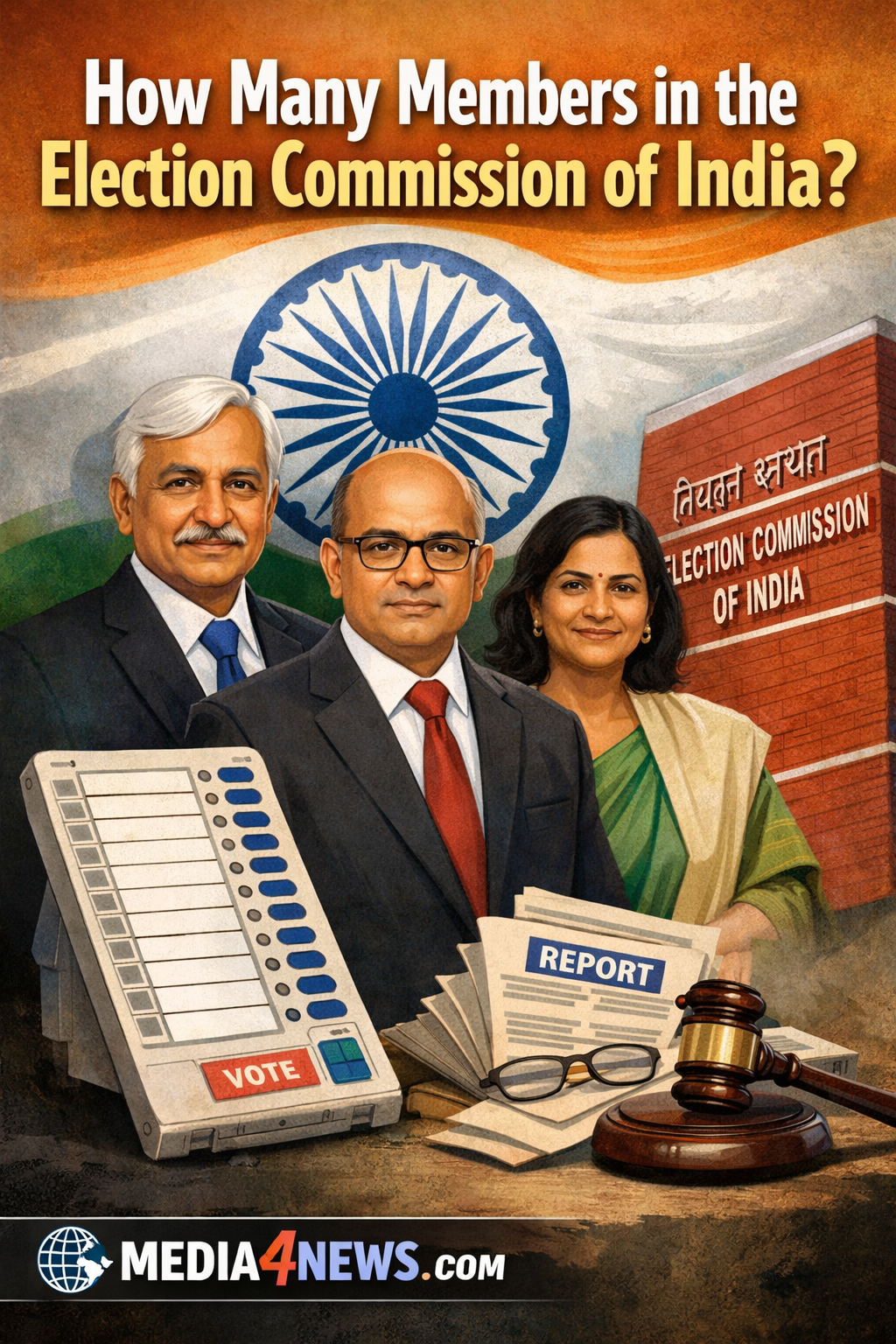
How Many Members in Election Commission of India: Structure and Role Explained
The Election Commission of India (ECI) is one of the most important constitutional bodies in the country, responsible for administering and overseeing elections at both the national and state levels. It plays a crucial role in ensuring that the electoral process remains free, fair, and transparent.
One of the most common questions about the Election Commission is: How many members are in the Election Commission of India? In this blog, we’ll discuss the structure of the Election Commission and its roles and responsibilities in shaping India’s democratic processes.
How Many Members in Election Commission of India?
As per the Constitution of India, the Election Commission of India is a multi-member body. The commission is headed by the Chief Election Commissioner (CEC) and two Election Commissioners (ECs).
Thus, the Election Commission of India currently consists of three members:
- Chief Election Commissioner (CEC)
- Two Election Commissioners (ECs)
These members are appointed by the President of India. The Chief Election Commissioner is typically the senior-most member, and all members work together to manage election-related activities in the country.
Appointment of Members
The President of India appoints the Chief Election Commissioner and other Election Commissioners, and their terms of office are typically six years or until they turn 65 years old, whichever comes first. The appointments are made based on the recommendations of the government.
Tenure and Independence
The tenure of the members of the Election Commission is fixed, but they can be removed from office only by the President of India, and that too under specific circumstances, which include proven misbehavior or incapacity. The Election Commission’s structure is designed to ensure independence from the executive branch of the government, allowing it to function impartially.
Powers and Functions of the Election Commission of India
The Election Commission of India is empowered with a range of functions and responsibilities that include:
1. Supervision of Elections
The EC oversees elections to the Lok Sabha (House of the People), Rajya Sabha (Council of States), Legislative Assemblies, Legislative Councils, and the Presidential elections.
2. Code of Conduct
The Election Commission enforces the Model Code of Conduct (MCC) during elections to ensure that political parties and candidates adhere to guidelines for a fair election.
3. Voter Registration
The Election Commission is responsible for the electoral rolls, ensuring that all eligible citizens are registered to vote.
4. Delimitation of Constituencies
The Commission works in collaboration with the Delimitation Commission to define and redraw the boundaries of constituencies based on population and other relevant factors.
5. Election Conduct
The Commission manages polling stations, ensures the security of election material, and organizes voting, counting, and declaration of results.
6. Ensuring Transparency
The EC ensures that elections are conducted with maximum transparency. It is also responsible for overseeing the fairness of the entire election process.
7. Dispute Resolution
The Election Commission has the authority to settle disputes regarding elections, especially those concerning election results or improper election practices.
Current Members of the Election Commission
The current members of the Election Commission of India are:
- Chief Election Commissioner: Rajiv Kumar
- Election Commissioner: Anup Chandra Pandey
- Election Commissioner: Arun Goel
These members collectively make key decisions on election-related matters and provide leadership to the entire election process.
Recent Changes and Expansion
In recent years, there have been discussions around expanding the Election Commission’s membership to include more commissioners for better representation, especially in a growing democracy like India. Proposals have been made to have a multi-member body with more commissioners in the future, but the number of members remains at three as per the Constitution.
Why is the Election Commission Important?
The Election Commission of India holds a key position in India’s democracy, ensuring that elections are free from political interference and corruption. Its role in overseeing the elections gives the public confidence in the legitimacy of the electoral process and ensures that citizens’ votes are counted fairly.