
How to Create a Vision Board for 2026: A Simple, Intentional Guide
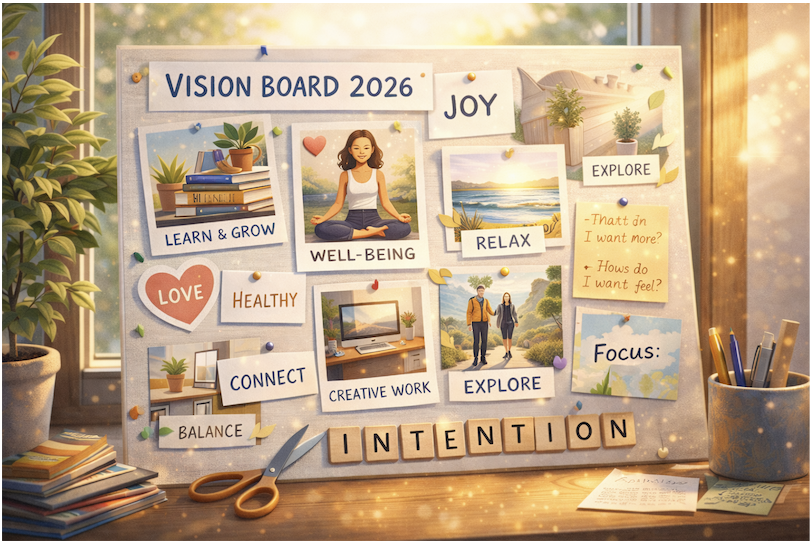
As a new year approaches, many people look for ways to reflect, reset, and move forward with clarity. A vision board can be a helpful tool—not as a promise of outcomes, but as a way to organize intentions, values, and direction.
Creating a vision board for 2026 isn’t about predicting the future. It’s about understanding what matters to you now and gently shaping how you want the year ahead to feel.
What a Vision Board Really Is
A vision board is a visual collection of words, images, and symbols that represent goals, priorities, and emotional states you want to cultivate.
It doesn’t have to be elaborate or artistic. At its best, a vision board acts as a quiet reminder of:
- What you’re working toward
- How you want to show up daily
- What you want to give more space to in your life
Step 1: Reflect Before You Begin
Before collecting images or phrases, take a moment to pause.
Ask yourself:
- What did 2025 teach me?
- What do I want more of in 2026?
- What feels heavy that I’d like to release?
- How do I want to feel at the end of next year?
Write down a few words or short sentences. This reflection becomes the foundation of your board.
Step 2: Choose Your Focus Areas
Instead of adding everything at once, it helps to group your intentions into gentle themes. For example:
- Well-being and health
- Work or creative growth
- Relationships and connection
- Personal time and rest
- Learning or skill-building
You don’t need to cover every area of life. Focus on what feels most meaningful right now.
Step 3: Gather Visual Elements
Now comes the creative part. Look for images, colors, or words that reflect your intentions.
You can use:
- Magazine cutouts
- Printed photos or quotes
- Handwritten words
- Digital images if you prefer a virtual board
Choose visuals that create a sense of calm, motivation, or clarity—not pressure.
Step 4: Assemble Your Vision Board
Place your elements in a way that feels balanced to you. There’s no right layout.
Some people prefer:
- A central word or theme (like “balance” or “clarity”)
- Sections for different life areas
- A minimal layout with fewer, meaningful pieces
Let your intuition guide you rather than perfection.
Step 5: Place It Where You’ll See It
Your vision board works best when it becomes part of your environment.
You might place it:
- Near your workspace
- In your bedroom
- As your phone or laptop background
- Inside a journal or planner
Seeing it regularly keeps your intentions present without effort.
Step 6: Revisit and Adjust Over Time
Life changes, and your goals may evolve. That’s natural.
Allow your vision board to:
- Be updated mid-year
- Have elements removed or added
- Reflect growth rather than fixed outcomes
A flexible board supports awareness rather than control.
A Gentle Reminder for 2026
A vision board doesn’t create results on its own. What it can do is support clarity, focus, and mindful choices—one day at a time.
When paired with action, reflection, and patience, it becomes less about “manifesting” and more about living with intention.
As you prepare for 2026, let your vision board be a calm companion—one that reminds you where you’re headed, without rushing the journey.