
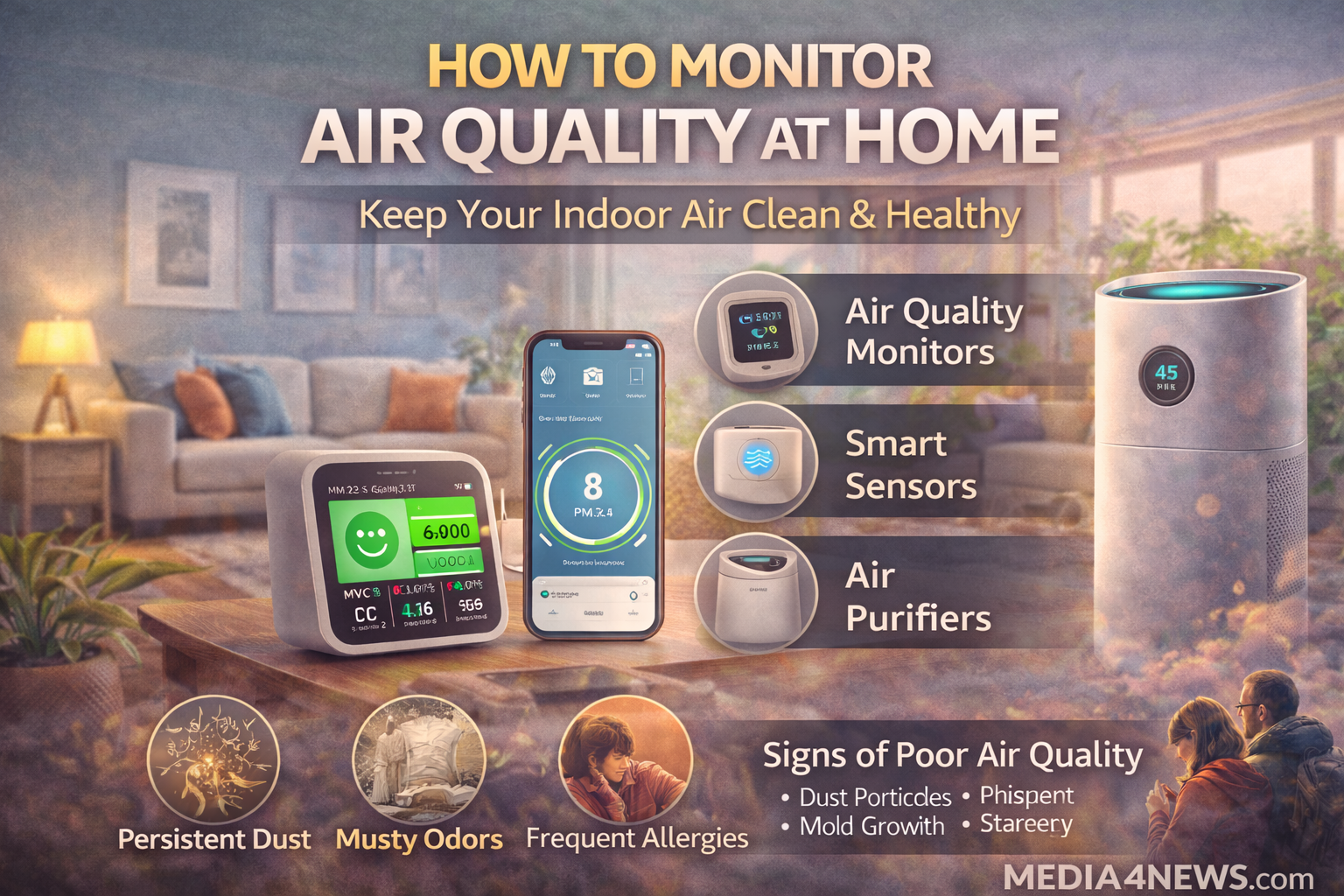
How to Monitor Air Quality at Home: Simple Ways to Keep Your Indoor Air Healthy
Indoor air quality plays an important role in maintaining good health and overall well-being. Many people assume that pollution only exists outdoors, but indoor air can sometimes be even more polluted due to dust, smoke, chemicals, and poor ventilation. Learning how to monitor air quality at home can help you identify potential problems and create a healthier living environment for your family.
In this article, we explore practical ways to track and improve indoor air quality.
Why Indoor Air Quality Matters
Poor indoor air quality can lead to several health problems such as allergies, respiratory issues, headaches, and fatigue. Pollutants inside the home can come from various sources including:
- Cooking smoke
- Dust and pet dander
- Cleaning chemicals
- Mold and moisture
- Tobacco smoke
- Outdoor pollution entering the house
Monitoring indoor air quality allows homeowners to detect these pollutants early and take necessary steps to improve air circulation and cleanliness.
Use Indoor Air Quality Monitors
One of the most effective ways to monitor air quality at home is by using indoor air quality monitors. These devices measure pollutants and provide real-time information about the air inside your house.
Most air quality monitors track:
- PM2.5 and PM10 particles (fine dust and pollution)
- Carbon dioxide (CO2)
- Volatile organic compounds (VOCs)
- Humidity and temperature levels
Many modern monitors also connect to smartphone apps, allowing you to track air quality trends over time.
Install Smart Air Quality Sensors
Smart home technology has made air quality monitoring easier than ever. Smart air quality sensors can integrate with home automation systems and send alerts when pollution levels rise.
These sensors help homeowners:
- Detect pollution instantly
- Monitor different rooms in the house
- Receive notifications through mobile apps
Some smart systems can even activate air purifiers automatically when pollution levels increase.
Use Air Purifiers with Built-in Sensors
Many modern air purifiers come with built-in air quality sensors that measure pollution levels in real time. These devices display air quality through color indicators or digital readings.
For example:
- Green indicates clean air
- Yellow indicates moderate pollution
- Red indicates poor air quality
Air purifiers with sensors can automatically adjust their cleaning speed depending on pollution levels.
Monitor Humidity Levels
Humidity levels also affect indoor air quality. High humidity can lead to mold growth, while extremely low humidity can cause dry skin and breathing discomfort.
Using a humidity monitor or hygrometer can help you maintain healthy humidity levels inside your home. Ideally, indoor humidity should stay between 30% and 50%.
Check Ventilation and Airflow
Proper ventilation plays a key role in maintaining good indoor air quality. Homes with poor airflow can trap pollutants inside.
To improve ventilation:
- Open windows regularly
- Use exhaust fans in kitchens and bathrooms
- Install ventilation systems if necessary
Monitoring airflow helps prevent the buildup of indoor pollutants.
Observe Signs of Poor Air Quality
Sometimes, poor air quality can be detected without advanced equipment. Common signs include:
- Persistent dust accumulation
- Musty or stale odors
- Frequent allergy symptoms
- Mold growth on walls or ceilings
- Increased coughing or breathing issues
If these signs appear frequently, it may indicate poor indoor air quality that requires attention.
Tips to Improve Air Quality at Home
Along with monitoring air quality, it’s important to adopt habits that help keep the air clean. Some simple steps include:
- Regularly cleaning carpets and furniture
- Avoiding smoking indoors
- Using natural cleaning products
- Keeping indoor plants that help purify air
- Maintaining air conditioners and filters
These measures can significantly reduce indoor pollutants and improve the overall environment.
Conclusion
Monitoring air quality at home is essential for maintaining a healthy living space. By using air quality monitors, smart sensors, and proper ventilation techniques, homeowners can detect pollutants early and take action to improve indoor air conditions.
With increasing pollution levels in many cities, taking proactive steps to monitor and improve indoor air quality can help protect your family’s health and well-being.