
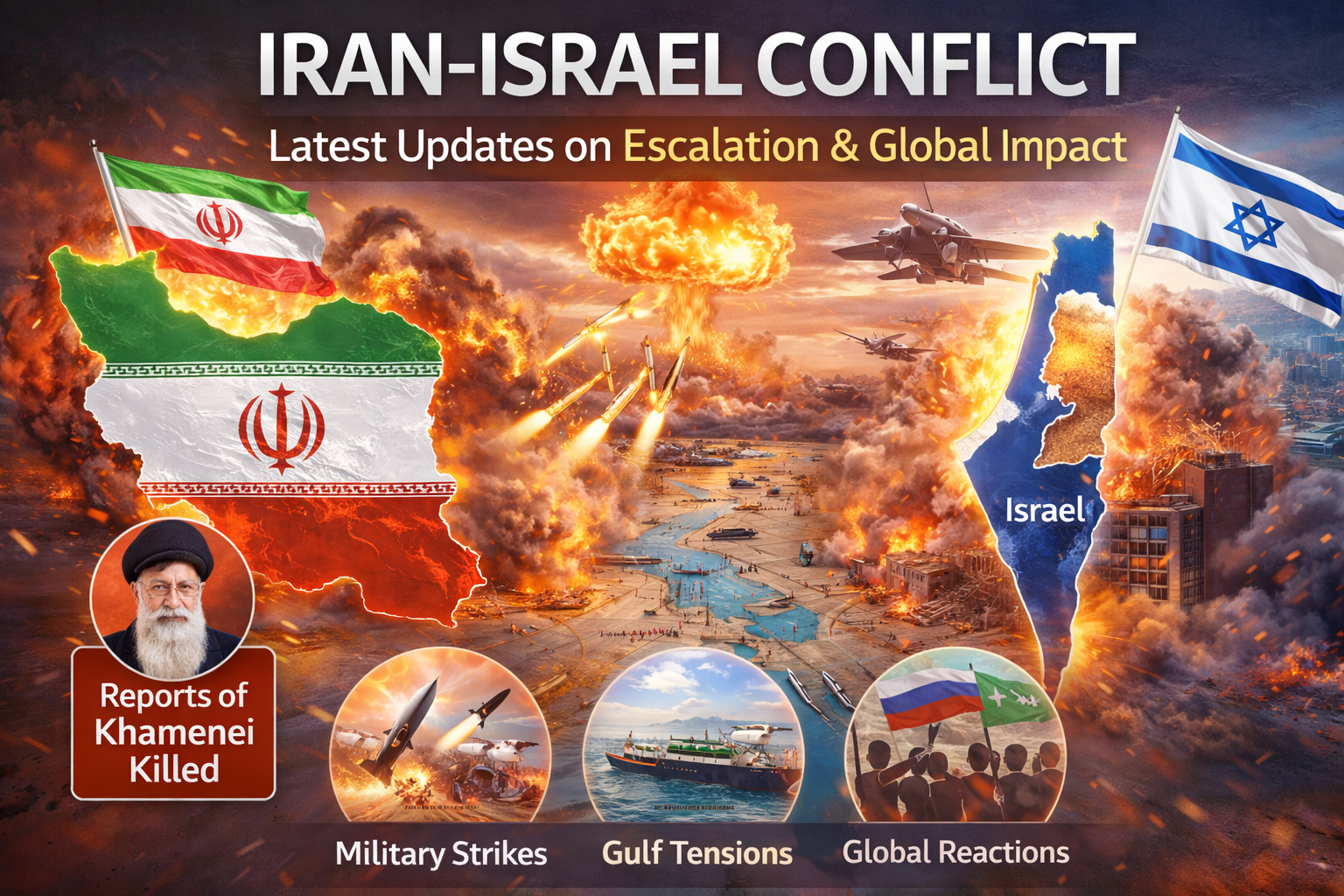
Iran–Israel Conflict: Latest Updates on Middle East Escalation
The conflict between Iran and Israel, involving direct military action and wider regional tensions, has rapidly escalated in recent days, drawing global attention and concern. What began as targeted strikes has now unfolded into a larger geopolitical crisis with actions and reactions affecting multiple countries across the Middle East.
Here’s the latest on the Iran–Israel situation and why it matters.
Major Escalation After Strikes on Iran
A joint military offensive by Israel and the United States has struck multiple strategic locations inside Iran, including Tehran and military installations. These airstrikes target Iran’s missile capabilities and nuclear infrastructure amid longstanding concerns about Tehran’s regional ambitions.
In a dramatic development, a senior Israeli official said Iran’s Supreme Leader Ayatollah Ali Khamenei was killed in the strikes — though Iranian authorities have yet to confirm this. This has sparked both international shock and mixed reactions among Iranians, with some abroad celebrating while others brace for intensified conflict.
Wide‑Ranging Military Responses
Following initial attacks, Iran has retaliated with its own missile and drone strikes against U.S. and Israeli targets, including American facilities in Saudi Arabia and other Gulf states. Iran’s aggressive response reflects its vow to resist and “show no leniency,” signaling a protracted standoff rather than a quick resolution.
Israeli forces have also conducted additional strikes, including against state media infrastructure in Tehran, claiming the broadcasts fuel misinformation and support to militant groups like Hezbollah.
Regional and Global Fallout
The conflict has begun affecting neighboring countries, with:
- Gulf states condemning Iranian attacks, especially the UAE, Qatar, Bahrain, and Saudi Arabia — all expressing concern over violations of their airspace and territory.
- Saudi Arabia summoning the Iranian ambassador amid escalating Gulf tensions.
- Oil and trade routes around the Strait of Hormuz under threat, raising concerns over global energy supplies and economic impact.
International reactions are mixed: while some Western governments align with the U.S. and Israel on security concerns, Russia has strongly condemned the strikes as “unprovoked aggression,” warning of broader instability and humanitarian consequences.
Human Cost and Civilian Impact
The latest phase of the conflict has resulted in significant casualties, including civilians in Iran, Lebanon, Israel, and U.S. personnel. Reports indicate dozens killed and many more injured as the crisis intensifies. Humanitarian concerns are mounting, with fears of displacement and infrastructure damage growing by the day.
Why This Conflict Matters
The Iran–Israel confrontation has deep roots:
- Long‑standing regional rivalries between Tehran and Jerusalem
- Iran’s support for militant groups like Hezbollah and Hamas
- Concerns over nuclear capability and missile development
- Global power dynamics with U.S. involvement and other allies positioned on various sides
Experts warn that escalation could reverberate far beyond the Middle East — impacting global markets, international diplomacy, and regional alliances.
What Happens Next?
With the situation evolving rapidly:
- Diplomacy and peace negotiations are still uncertain but remain crucial to de‑escalation.
- Military actions may continue on multiple fronts, including air, land, and sea.
- Global economic impacts — especially on oil prices — are likely if key shipping lanes remain disrupted.
As the Iran–Israel conflict unfolds, the world watches closely for signs of escalation, diplomacy, or potential resolution.
Stay tuned for further updates as new developments emerge.