
Low Blood Pressure Range: What’s Normal and When Should You Be Concerned?
Blood pressure is one of the most important indicators of heart health. It is measured as two numbers: systolic pressure (the pressure when your heart beats) and diastolic pressure (the pressure when your heart rests between beats). While most people are aware of the risks associated with high blood pressure, low blood pressure (also known as hypotension) can be equally concerning.
Understanding what constitutes a low blood pressure range, how to recognize it, and when to seek medical help can help prevent potential health problems associated with this condition.
What Is Low Blood Pressure?
Low blood pressure refers to a condition where the blood pressure reading is lower than normal. Typically, a healthy blood pressure is around 120/80 mmHg, with the top number (systolic) representing the pressure when the heart beats, and the bottom number (diastolic) representing the pressure when the heart is at rest.
Low blood pressure is generally defined as:
- Less than 90 mmHg systolic or
- Less than 60 mmHg diastolic
If your blood pressure consistently measures lower than these values, it may indicate hypotension. However, the threshold for low blood pressure can vary depending on the individual. Some people naturally have low blood pressure without any symptoms, while for others, it can lead to dizziness, fainting, and other complications.
Different Ranges of Blood Pressure
Blood pressure is categorized into ranges based on the readings. Here’s a general guide:
- Normal: Less than 120/80 mmHg
- Elevated: 120-129 mmHg systolic and less than 80 mmHg diastolic
- Hypertension (High Blood Pressure):
- Stage 1: 130-139 mmHg systolic or 80-89 mmHg diastolic
- Stage 2: 140 mmHg or higher systolic or 90 mmHg or higher diastolic
- Low Blood Pressure (Hypotension): Less than 90/60 mmHg
Low Blood Pressure Ranges and Types
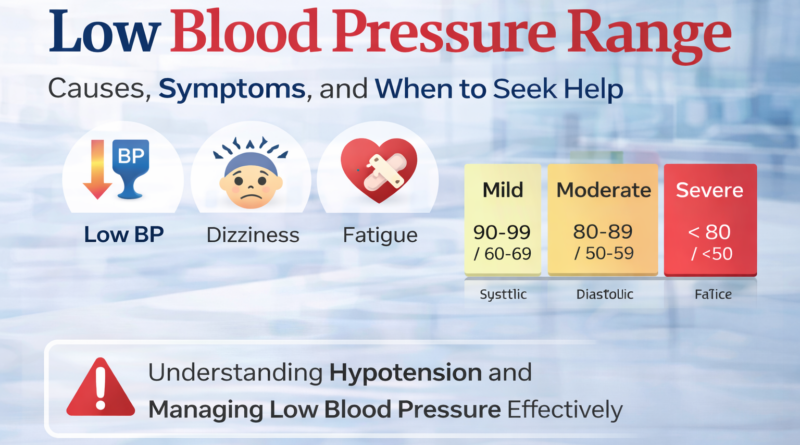
- Mild Hypotension:
- Systolic pressure between 90-99 mmHg
- Diastolic pressure 60-69 mmHg
- Typically does not cause noticeable symptoms, but can be a sign of underlying conditions.
- Moderate Hypotension:
- Systolic pressure between 80-89 mmHg
- Diastolic pressure 50-59 mmHg
- Symptoms such as dizziness and fainting may occur.
- Severe Hypotension:
- Systolic pressure below 80 mmHg
- Diastolic pressure below 50 mmHg
- This is considered dangerous and requires immediate medical attention as it can affect blood flow to vital organs, including the heart and brain.
Causes of Low Blood Pressure
There are various factors that can lead to low blood pressure. Some common causes include:
1. Dehydration
When your body loses more fluids than it takes in, it can weaken the heart and lower blood volume, leading to low blood pressure.
2. Heart Conditions
Certain heart conditions such as bradycardia (slow heart rate), heart attack, and heart valve problems can prevent your heart from pumping blood effectively, causing low blood pressure.
3. Endocrine Problems
Hormonal imbalances, such as underactive thyroid (hypothyroidism), adrenal insufficiency (Addison’s disease), and low blood sugar, can cause hypotension.
4. Blood Loss
Severe blood loss from an injury or internal bleeding can reduce the amount of blood in your body, leading to a drop in blood pressure.
5. Medications
Certain medications, including diuretics, beta-blockers, and antidepressants, can cause low blood pressure as a side effect.
6. Severe Infections
Infections that affect the bloodstream (septicemia) can lead to dangerously low blood pressure.
7. Nutritional Deficiencies
Deficiencies in essential nutrients such as vitamin B12, folate, and iron can prevent your body from producing enough red blood cells, causing low blood pressure.
Symptoms of Low Blood Pressure
While low blood pressure may not cause noticeable symptoms in many individuals, it can sometimes lead to the following:
- Dizziness or lightheadedness
- Fainting
- Blurred vision
- Fatigue
- Nausea
- Rapid or shallow breathing
- Cold, clammy skin
If these symptoms occur suddenly or are persistent, it’s important to consult a healthcare provider for further evaluation.
When Should You Seek Medical Help?
Low blood pressure can be dangerous, especially if it causes fainting or disrupts normal blood flow to vital organs. If you experience any of the following symptoms, seek immediate medical attention:
- Severe dizziness or fainting
- Chest pain
- Shortness of breath
- Confusion or difficulty thinking clearly
- Signs of shock (pale, cold skin, weak or rapid pulse)
In these cases, prompt treatment is essential to avoid complications such as organ damage or a stroke.
Treatment and Management of Low Blood Pressure
Treatment for low blood pressure depends on its cause. Some general strategies to help raise low blood pressure include:
- Increasing fluid intake: Dehydration is a common cause of low BP, so drinking more water can help.
- Increasing salt in the diet: Salt can raise blood pressure, but it should be done under a doctor’s supervision.
- Wearing compression stockings: These can help reduce blood pooling in the legs and alleviate symptoms of hypotension.
- Eating small, frequent meals: Large meals can lead to a sudden drop in blood pressure, so smaller meals may help prevent this.
- Medication: In some cases, medications such as fludrocortisone (to increase blood volume) or midodrine (to constrict blood vessels) may be prescribed.
Final Thoughts
Low blood pressure is a condition that requires attention, especially when symptoms affect daily life. If you have persistent symptoms or your blood pressure falls to dangerously low levels, it’s important to seek medical advice. With the right treatment, lifestyle changes, and monitoring, most people can manage low blood pressure effectively.
Regular checkups and blood pressure monitoring will help you keep track of your heart health and ensure that low blood pressure does not lead to serious complications.