
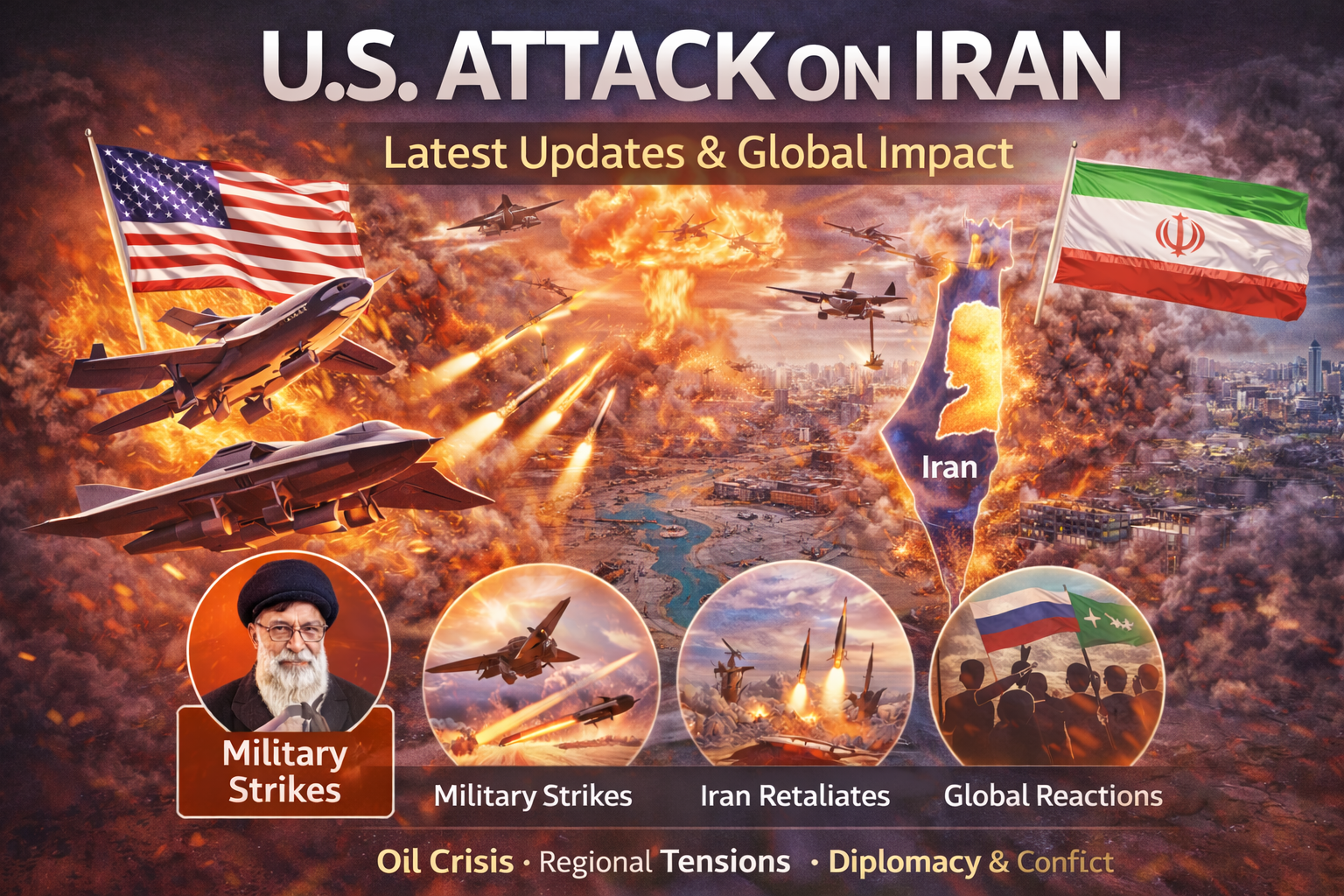
U.S. Attack on Iran: Latest Updates, Causes, and Global Impact
The Middle East has been thrust into a new phase of conflict after the United States and Israel launched coordinated military strikes inside Iran in one of the most serious escalations in the region in recent years. The intense military operations have sparked global attention and raised concerns about wider implications for peace, security, and energy markets.
Here’s a clear and up‑to‑date look at what’s happening, why the U.S. attacked Iran, and what it could mean for the world.
What Happened: U.S. and Israeli Strikes on Iran
On February 28, 2026, the United States and Israel launched a series of airstrikes and missile attacks against strategic targets in Iran, including military infrastructure, nuclear‑related sites, and command centers. These coordinated attacks caused significant damage across multiple locations, including Tehran, and resulted in hundreds of casualties.
The military campaign is being led under an operation involving advanced weaponry such as:
- Cruise missiles
- Fighter jets
- Stealth bombers
- Suicide drones and other unmanned systems
According to military officials, these strikes were intended to dismantle Iran’s military capabilities and curb its nuclear and missile programs.
Why Did the U.S. Attack Iran?
There are several reasons cited by U.S. officials and analysts for the attack:
1. Security Concerns
U.S. leaders have routinely stated that Iran’s expanding missile program and regional influence pose a direct threat to American interests and allies in the Middle East.
2. Response to Iranian Actions
Iran has launched missile, drone, and other strike operations against U.S. bases and facilities in the Gulf region and beyond. Its proxies are also active in conflicts across the Middle East.
3. Coordination With Israel
Although initial tensions were rooted in Israeli strategic concerns, Washington joined the military campaign in support of shared security objectives.
Immediate Aftermath and Retaliation
Following the U.S.–Israeli strikes:
- Iran launched missile and drone attacks on U.S. and allied military bases across the Middle East.
- Embassies in the Gulf region, including the U.S. Embassy in Riyadh, were hit, leading to evacuations and heightened warnings.
- Casualties have mounted across multiple countries, including hundreds in Iran and deaths among U.S. service members.
The conflict shows no immediate signs of stopping and continues to unfold with both military actions and diplomatic responses.
Global Reactions and Diplomacy
The attacks have drawn significant international attention:
- United Nations: Emergency Security Council meetings have condemned the escalating violence while urging diplomatic solutions.
- Allied Countries: Some Western governments back U.S. security claims, while others call for de‑escalation.
- Regional States: Gulf countries are increasingly concerned about security and economic stability.
Experts are warning that if diplomacy fails, the conflict could spill over into a broader regional war with serious humanitarian consequences.
Economic and Strategic Impact
The U.S. attack on Iran has already impacted:
- Global oil prices, due to threats to shipping lanes like the Strait of Hormuz.
- Regional security dynamics, as countries reassess military preparedness.
- Geopolitical alliances, with world powers taking varied positions.
This conflict continues to influence global markets, international law debates, and foreign policy decisions.
What Comes Next?
The situation remains volatile:
- U.S. and allied forces may conduct additional strikes or expand operations.
- Iran could intensify retaliation through direct or proxy attacks.
- Diplomatic efforts may increase to prevent a broader war.
With tensions high and stakes higher, global leadership will play a key role in determining whether the conflict escalates further or moves toward negotiation.
Conclusion
The U.S. attack on Iran represents one of the most significant military confrontations in recent Middle Eastern history, combining security, diplomacy, and strategic challenges. As events continue to unfold, understanding the causes, consequences, and global reactions is essential for anyone following international news and policy.
Stay tuned for the latest updates as the situation develops.