
Weather Jammu: Current Climate, Seasonal Trends, and Best Time to Visit
Jammu, the winter capital of Jammu and Kashmir, experiences a diverse climate throughout the year. Located in the foothills of the Himalayas, the city’s weather varies significantly across seasons, ranging from hot summers to cool winters and refreshing monsoon rains. Understanding the weather in Jammu can help residents, tourists, and pilgrims plan their activities effectively.
Current Weather Conditions in Jammu
Jammu typically experiences a subtropical climate, which means summers are hot, winters are mild to cool, and the monsoon season brings moderate rainfall. Weather conditions may vary slightly depending on the time of year, but the region usually enjoys clear skies and pleasant evenings during much of the year.
Temperatures in Jammu often fluctuate between 10°C and 40°C, depending on the season. Summer months can be particularly warm, while winter brings cooler temperatures and occasional fog.
Jammu Weather by Season
Summer Season (March to June)
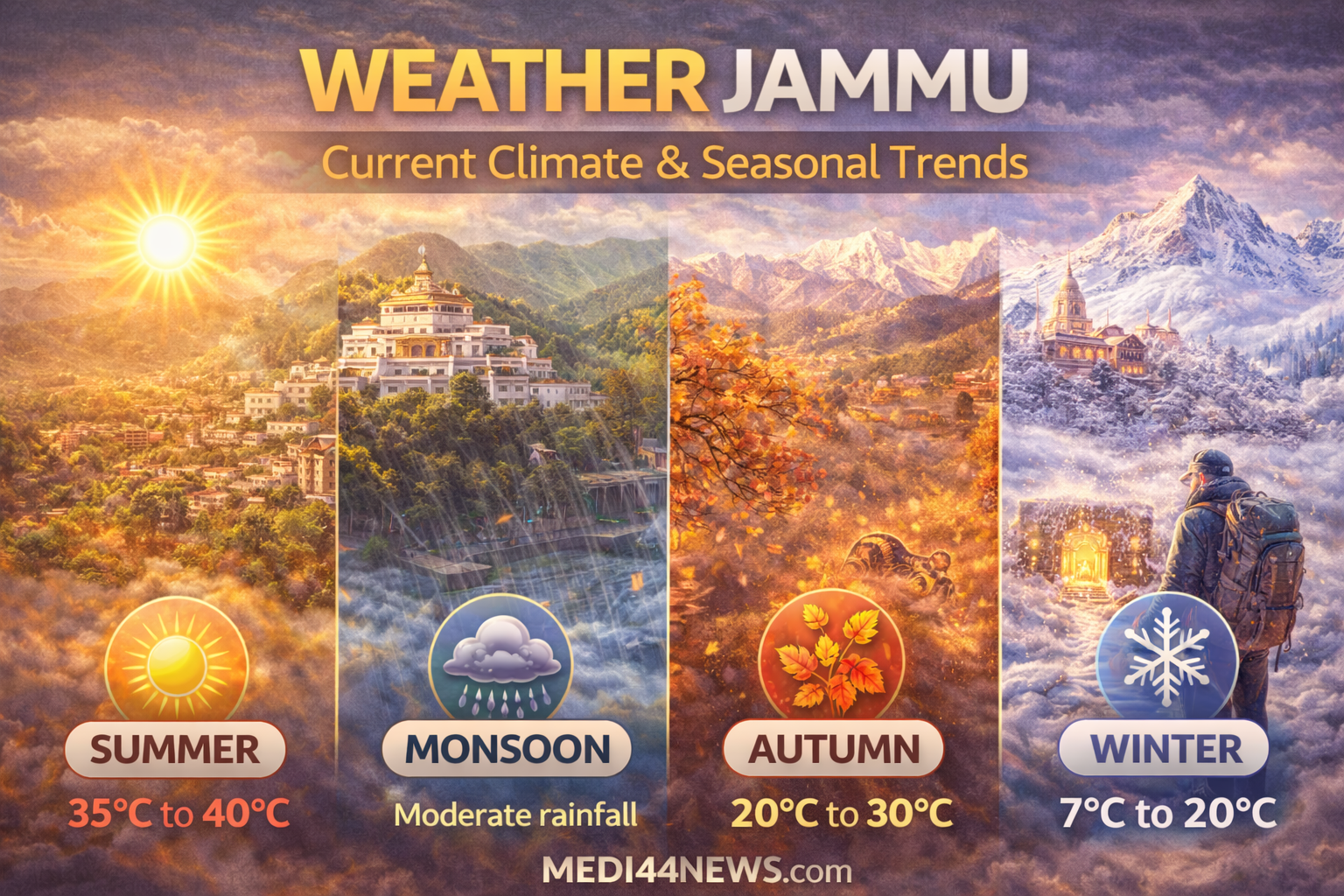
Summer in Jammu begins around March and lasts until June. During this period, temperatures can rise sharply, often reaching 35°C to 40°C in peak months like May and June.
Although daytime temperatures can be quite high, mornings and evenings are usually more comfortable. Many visitors prefer to travel to nearby hill stations during this time to escape the heat.
Monsoon Season (July to September)
The monsoon season arrives in Jammu around July and continues until September. The city receives moderate rainfall, which helps reduce the intense summer heat.
During this season:
- Humidity levels increase
- Temperatures slightly drop
- Occasional heavy rain showers occur
The surrounding hills and landscapes become lush and green, making the region visually appealing.
Autumn Season (October to November)
Autumn in Jammu is considered one of the most pleasant seasons. The weather remains mild and comfortable, with temperatures ranging between 20°C and 30°C.
Clear skies and comfortable weather make this period ideal for tourism, sightseeing, and religious pilgrimages such as the famous Vaishno Devi Yatra.
Winter Season (December to February)
Winter in Jammu is relatively mild compared to higher Himalayan regions but can still be chilly. Temperatures generally range between 7°C and 20°C.
During winter:
- Nights can be cold
- Morning fog may occur
- The weather remains mostly dry
Tourists visiting nearby hill areas may experience snowfall, though snowfall is rare within Jammu city itself.
Factors Influencing Jammu’s Weather
Several geographical and climatic factors influence the weather in Jammu:
Himalayan proximity: The nearby mountains influence temperature and rainfall patterns.
Monsoon winds: Seasonal winds from the Arabian Sea bring rainfall during the monsoon months.
Altitude variations: Differences in altitude across the region create microclimates.
Best Time to Visit Jammu
The best time to visit Jammu depends on personal preferences and travel plans.
- October to March: Ideal for sightseeing and pilgrimage visits.
- March to April: Pleasant spring weather with comfortable temperatures.
- July to September: Good for enjoying the greenery during the monsoon.
Many travelers choose winter months to explore Jammu and nearby destinations comfortably.
Importance of Weather Updates
Keeping track of weather updates in Jammu is important for travelers, especially those planning religious pilgrimages or outdoor activities. Weather conditions can influence travel schedules, road conditions, and sightseeing opportunities.
Checking daily forecasts can help ensure a safe and enjoyable trip.
Conclusion
The weather in Jammu changes across seasons, offering a unique climate experience throughout the year. From hot summers to pleasant autumn days and cool winter nights, Jammu’s weather plays a key role in shaping travel experiences and local lifestyles.
Whether you are planning a pilgrimage, a vacation, or simply monitoring weather updates, understanding Jammu’s climate patterns can help you prepare better.