

Are Vision Boards Real? Understanding How They Influence Goals and Mindset

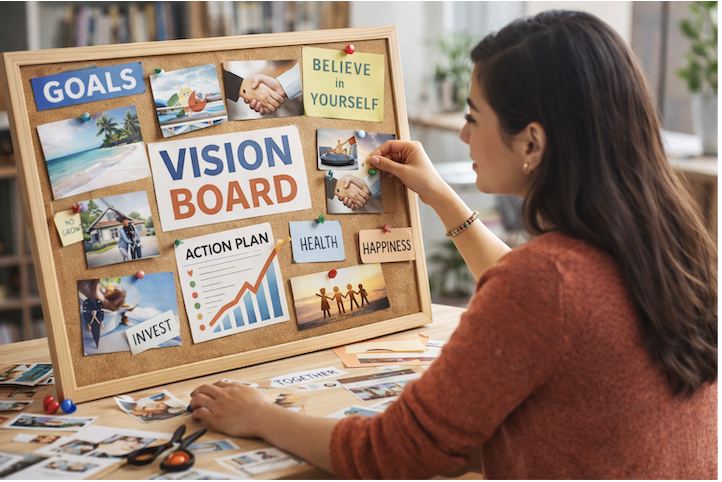
Vision boards are often associated with motivation, creativity, and personal growth. Many people use them as visual reminders of goals they want to work toward, while others question whether vision boards truly make a difference or are simply symbolic exercises.
So, are vision boards “real”? The answer depends on how we understand their role and how they are used.
What Is a Vision Board?
A vision board is a collection of images, words, or symbols that represent personal goals, values, or aspirations. These boards can be physical or digital and are usually placed somewhere visible as a daily reminder of intentions.
Rather than being a prediction of the future, a vision board reflects what a person is consciously choosing to focus on.
Why Vision Boards Feel Effective for Some People
Vision boards are not magical tools, but they can influence mindset and behavior in meaningful ways.
1. They Help Clarify Goals
Creating a vision board requires reflection. Choosing images and words encourages people to think clearly about what they want and why it matters.
2. They Reinforce Focus
Seeing visual reminders regularly can keep goals present in daily thought patterns, helping people make choices that align with those goals.
3. They Support Motivation
Visual cues can trigger positive emotions, which may support motivation during moments of doubt or low energy.
4. They Encourage Self-Awareness
Vision boards often reflect personal values, not just external success, helping people stay aligned with what feels meaningful.
What Science Says About Vision Boards
There is limited direct research on vision boards themselves. However, related studies on goal setting, visualization, and attention suggest that:
- Clear goals improve follow-through
- Visual reminders can strengthen memory and focus
- Mental imagery can support planning and confidence
Vision boards work best when paired with realistic planning and action, rather than passive expectation.
Common Misunderstandings About Vision Boards
Vision boards are sometimes misunderstood as tools that “make things happen” without effort. This can lead to disappointment if expectations are unrealistic.
Vision boards do not replace:
- Consistent effort
- Skill development
- Decision-making
- Adaptability
Instead, they serve as a supporting tool, not a guarantee.
How to Use a Vision Board in a Practical Way
To make a vision board more effective:
- Focus on process-oriented goals, not just outcomes
- Include words that reflect habits and values
- Review it regularly and reflect on progress
- Pair visual goals with small, achievable steps
This approach keeps the practice grounded and sustainable.
Are Vision Boards Right for Everyone?
Vision boards resonate differently with different people. Some find them inspiring, while others prefer written plans or structured goal-setting methods.
What matters is choosing a tool that supports clarity and consistency, rather than following trends.
Final Thoughts
Vision boards are real in the sense that they influence attention, motivation, and self-reflection. They are not shortcuts to success, but they can be meaningful reminders of personal direction when used thoughtfully.
When combined with awareness and action, vision boards can support progress—not by predicting outcomes, but by shaping focus and intention.