


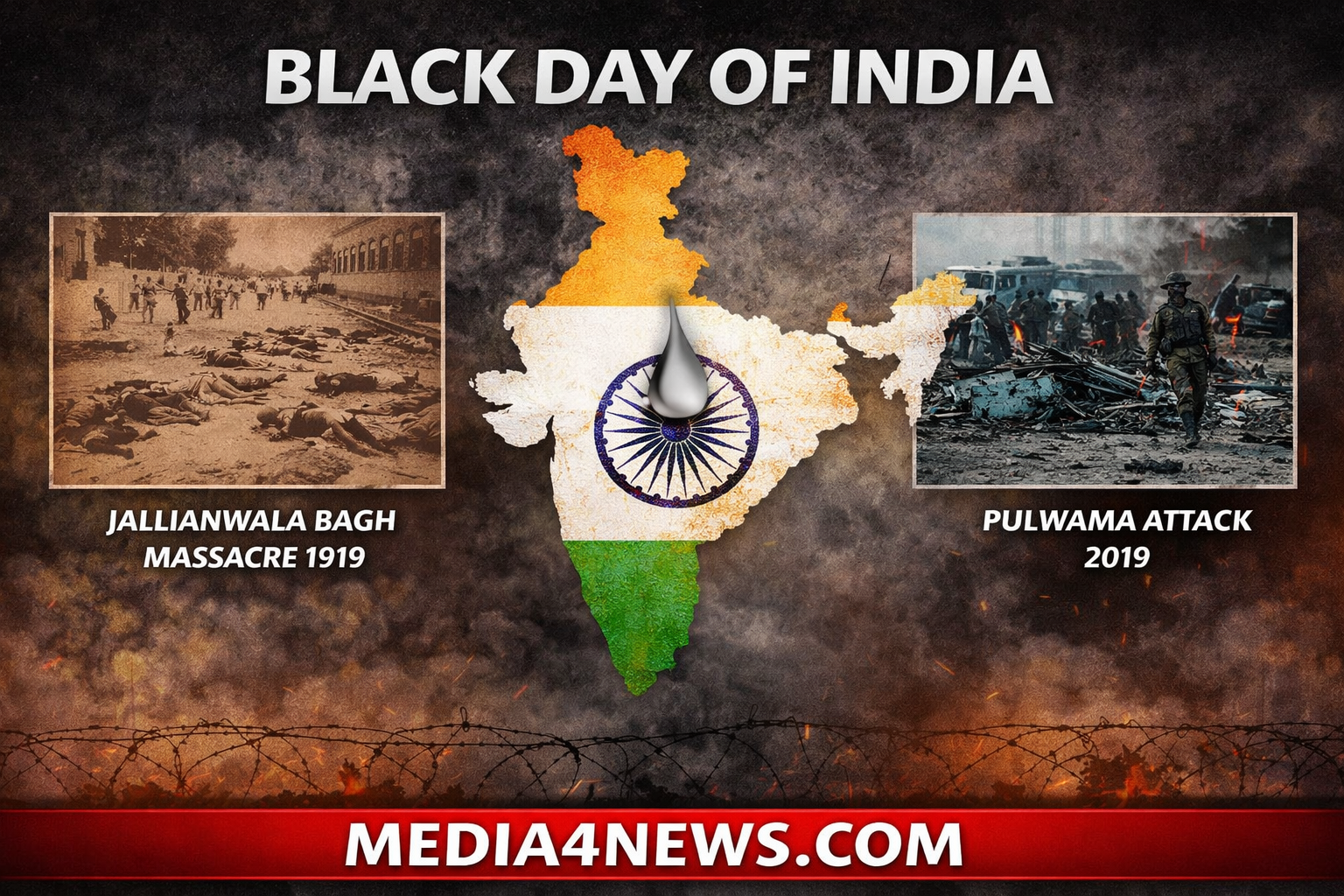
Black Day of India: Meaning, History, and Key Events Remembered
The term “Black Day of India” is used to describe tragic and painful events in the country’s history that are remembered with sorrow and reflection. These days mark incidents that had a deep emotional, political, or social impact on the nation.
Different events are referred to as “Black Day” in India depending on the context, each symbolizing loss, injustice, or a turning point in history.
What Does “Black Day” Mean?
A Black Day is observed to remember unfortunate or tragic events. It is often marked by mourning, protests, remembrance ceremonies, or awareness campaigns.
In India, several historical incidents are remembered as Black Days due to their significance and lasting impact.
Major Black Days in India
Jallianwala Bagh Massacre (April 13, 1919)
One of the most tragic events in Indian history, the Jallianwala Bagh massacre, is often referred to as a Black Day. British troops opened fire on unarmed civilians gathered in Amritsar, leading to the deaths of hundreds of people.
This incident became a turning point in India’s freedom struggle.
Emergency Declaration (June 25, 1975)
The declaration of Emergency in 1975 is also remembered as a Black Day by many. During this period:
- Civil liberties were suspended
- Press freedom was restricted
- Political opponents were arrested
It remains one of the most controversial phases in Indian democracy.
Partition of India (August 1947)
While India gained independence in 1947, the Partition of India is considered a Black Day by many due to:
- Massive displacement of people
- Communal violence
- Loss of lives
Millions of people were affected during this period.
Pulwama Attack (February 14, 2019)
The Pulwama terror attack is another day remembered with grief. A suicide bombing targeted Indian security forces, resulting in the loss of many lives.
This incident deeply impacted the nation and led to heightened security measures.
Demonetization (November 8, 2016)
Some groups refer to demonetization as a Black Day due to the economic challenges faced by citizens, especially those dependent on cash transactions.
However, this remains a subject of political debate.
Why Black Days Are Important
Observing Black Days serves several purposes:
- Remembering history: It ensures that tragic events are not forgotten
- Honoring victims: It pays tribute to those who lost their lives
- Learning lessons: It helps society avoid repeating past mistakes
- Raising awareness: It highlights important social and political issues
How Black Days Are Observed
Black Days in India are observed in different ways depending on the event:
- Memorial services and tributes
- Public awareness campaigns
- Silent protests or gatherings
- Media coverage and discussions
These observances help keep the memory of such events alive.
Different Perspectives on “Black Day”
It is important to note that the term “Black Day” can be subjective. Different groups may refer to different events as Black Days based on their historical, political, or cultural perspectives.
Understanding these perspectives helps in gaining a balanced view of history.
Conclusion
The Black Day of India represents moments of sorrow and reflection in the nation’s history. Whether it is historical tragedies, political events, or national security incidents, these days remind us of the challenges India has faced over time.
Remembering these events is essential for building awareness, honoring the past, and shaping a better future.