


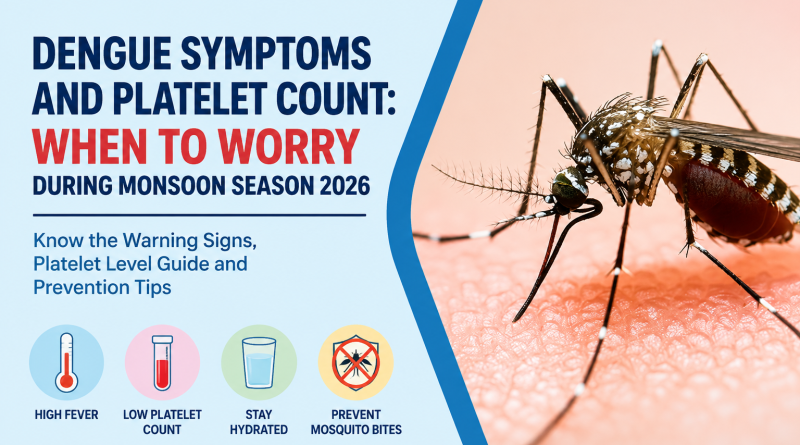
Dengue Symptoms and Platelet Count: When to Worry During Monsoon Season
Every year during the monsoon season, cases of dengue, viral fever, and waterborne diseases increase across many parts of India. Increased rainfall, water stagnation, and mosquito breeding create favourable conditions for infections to spread.
Among these illnesses, dengue fever remains one of the most common monsoon-related health concerns. Many people search for information about dengue symptoms, platelet count levels, warning signs, and when medical attention is required.
Understanding the symptoms and taking timely precautions can help prevent serious complications.
What is Dengue Fever?
Dengue is a mosquito-borne viral infection caused by the dengue virus. It spreads through the bite of infected Aedes mosquitoes, which usually breed in stagnant water.
Dengue cases commonly increase during and after the monsoon season because water accumulation provides breeding areas for mosquitoes.
The infection can range from mild fever to severe dengue, which may require immediate medical care.
Common Dengue Symptoms
Dengue symptoms usually appear within a few days after a mosquito bite.
Common symptoms include:
- High fever
- Severe headache
- Pain behind the eyes
- Muscle and joint pain
- Extreme tiredness
- Skin rashes
- Nausea and vomiting
- Loss of appetite
Some people may recover within a week, while others may develop warning signs that require medical attention.
Dengue Symptoms That Need Immediate Attention
Seek medical advice if the following symptoms appear:
- Severe abdominal pain
- Persistent vomiting
- Bleeding from gums or nose
- Blood in vomit or stool
- Difficulty breathing
- Extreme weakness
- Sudden drop in fever with worsening condition
These symptoms may indicate severe dengue and should not be ignored.
Dengue Platelet Count: When Should You Worry?
Platelets play an important role in blood clotting. During dengue infection, platelet levels may decrease temporarily.
A normal platelet count is generally:
1.5 lakh to 4.5 lakh platelets per microlitre of blood
During dengue:
- Above 1 lakh: Usually monitored regularly
- 50,000–1 lakh: Requires close observation
- Below 50,000: Medical monitoring becomes important
- Below 20,000: Higher risk of bleeding complications
However, platelet count alone does not determine dengue severity. Doctors also consider symptoms, hydration levels, blood pressure, and other test results.
Monsoon Diseases Common in India
Apart from dengue, several other infections increase during the rainy season.
1. Viral Fever
Seasonal viral infections can cause:
- Fever
- Body pain
- Cold and cough
- Fatigue
Most cases improve with rest, fluids, and proper care.
2. Waterborne Diseases
Contaminated water during monsoon can lead to diseases such as:
- Typhoid
- Cholera
- Diarrhoea
- Hepatitis A
Symptoms may include:
- Stomach pain
- Loose motions
- Fever
- Vomiting
3. Malaria
Malaria is another mosquito-borne disease that increases during monsoon.
Symptoms include:
- Fever with chills
- Sweating
- Headache
- Weakness
Early diagnosis helps prevent complications.
How to Prevent Dengue and Monsoon Diseases
Follow these preventive measures during the rainy season:
Prevent Mosquito Breeding
- Avoid stagnant water near homes
- Clean water containers regularly
- Cover water storage tanks
- Remove unused containers that collect rainwater
Protect Yourself From Mosquito Bites
- Use mosquito repellents
- Wear full-sleeved clothes
- Install mosquito nets where required
Maintain Food and Water Safety
- Drink clean and filtered water
- Wash fruits and vegetables properly
- Avoid eating uncovered street food
- Maintain hand hygiene
Foods That Help During Dengue Recovery
During dengue recovery, maintaining hydration and proper nutrition is important.
Foods commonly recommended include:
- Coconut water
- Fresh fruits
- Soups
- Protein-rich foods
- Adequate fluids
Patients should follow medical advice regarding diet and treatment.
When Should You Get a Dengue Test?
Consider consulting a doctor if you experience:
- High fever lasting more than 2–3 days
- Severe body pain
- Persistent weakness
- Dengue symptoms after mosquito exposure
- Symptoms worsening after initial improvement
Doctors may recommend blood tests such as NS1 antigen testing or antibody tests depending on the stage of infection.
Frequently Asked Questions (FAQs)
What platelet count is dangerous in dengue?
A platelet count below 50,000 requires close medical monitoring, while very low counts may increase the risk of complications.
Can dengue happen twice?
Yes. Dengue has different virus types, and previous infection with one type does not provide complete protection against others.
How can dengue be prevented during monsoon?
Removing stagnant water, preventing mosquito bites, and maintaining cleanliness are effective prevention methods.
Is every fever during monsoon dengue?
No. Monsoon fever can occur due to several infections, including viral fever, malaria, and waterborne diseases. Proper testing helps identify the cause.
Summary
Monsoon season brings an increased risk of dengue and other infections across India. Recognising early symptoms, monitoring health changes, and seeking timely medical advice can help prevent serious complications.
Maintaining cleanliness, avoiding mosquito breeding areas, and following preventive measures are the best ways to stay safe during the rainy season.