


LDL Calculation: How It’s Measured and Why It Matters for Your Heart
When it comes to heart health, cholesterol levels play a crucial role. Among the different types of cholesterol, LDL (Low-Density Lipoprotein) is often referred to as “bad cholesterol” because high levels can increase the risk of heart disease and stroke. Understanding how LDL is calculated can help you better interpret your lipid profile test results and take control of your cardiovascular health.
What Is LDL Cholesterol?
LDL cholesterol carries cholesterol particles throughout your body. When LDL levels are high, cholesterol can build up in the walls of your arteries, forming plaque. Over time, this plaque narrows the arteries and increases the risk of heart attack, stroke, and other cardiovascular diseases.
That’s why doctors pay close attention to LDL levels when assessing heart health.
How Is LDL Calculated?
In most routine blood tests, LDL cholesterol is not measured directly. Instead, it is calculated using a formula based on other values from your lipid profile.
The Friedewald Formula
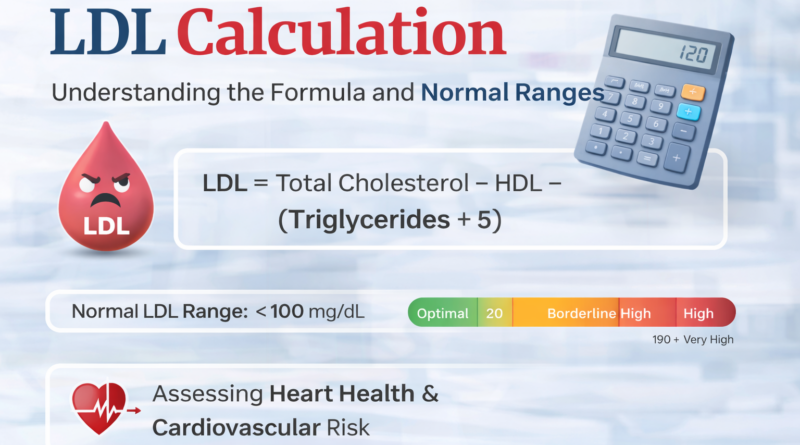
The most commonly used method for LDL calculation is the Friedewald equation, which is:
LDL = Total Cholesterol – HDL – (Triglycerides ÷ 5)
This formula works when:
- The blood sample is taken after fasting
- Triglyceride levels are below 400 mg/dL
Example of LDL Calculation
Let’s say your lipid profile shows:
- Total Cholesterol: 200 mg/dL
- HDL (Good Cholesterol): 50 mg/dL
- Triglycerides: 150 mg/dL
Using the formula:
LDL = 200 – 50 – (150 ÷ 5)
LDL = 200 – 50 – 30
LDL = 120 mg/dL
In this example, your LDL level would be 120 mg/dL.
When Is LDL Measured Directly?
The Friedewald formula may not be accurate if:
- Triglyceride levels are very high (above 400 mg/dL)
- The patient is non-fasting
- There are certain metabolic conditions
In such cases, doctors may order a direct LDL cholesterol test, which measures LDL without relying on calculations.
What Is a Healthy LDL Level?
LDL targets can vary depending on your health condition and risk factors.
General guidelines:
- Less than 100 mg/dL – Optimal
- 100–129 mg/dL – Near optimal
- 130–159 mg/dL – Borderline high
- 160–189 mg/dL – High
- 190 mg/dL and above – Very high
If you have diabetes, heart disease, or other risk factors, your doctor may recommend keeping LDL below 70 mg/dL.
Why LDL Calculation Is Important
LDL calculation helps doctors:
- Assess your risk of heart disease
- Monitor the effectiveness of cholesterol-lowering medications
- Guide lifestyle and dietary changes
- Prevent long-term cardiovascular complications
Regular lipid profile testing is essential, especially if you have high blood pressure, diabetes, obesity, or a family history of heart disease.
Tips to Lower LDL Cholesterol
If your LDL levels are high, consider these steps:
- Eat more fiber-rich foods like oats, vegetables, and fruits
- Reduce saturated and trans fats
- Exercise regularly (at least 30 minutes most days)
- Maintain a healthy weight
- Avoid smoking
- Follow your doctor’s advice regarding medications if prescribed
Final Thoughts
LDL calculation plays a vital role in understanding your cholesterol levels and overall heart health. Whether calculated using the Friedewald formula or measured directly, knowing your LDL number empowers you to make informed decisions about your lifestyle and medical care.
If you haven’t checked your cholesterol recently, consider scheduling a lipid profile test. Early detection and proper management can significantly reduce your risk of heart disease and help you maintain long-term health.