


Toxic Positivity: What It Is and How to Turn It into Healthy Positivity
Positivity is often seen as a solution to every problem. We’re told to “stay positive,” “look on the bright side,” and “be grateful no matter what.” While optimism can be helpful, toxic positivity is different. It dismisses real emotions and pressures people to feel happy even when they’re struggling.
Understanding toxic positivity helps us move toward a healthier, more balanced form of positivity—one that allows space for all emotions.
What Is Toxic Positivity?
Toxic positivity is the belief that people should maintain a positive mindset at all times, regardless of circumstances. It encourages suppressing difficult emotions instead of acknowledging them.
Common examples include:
- “Everything happens for a reason” during pain
- “Just be positive” when someone is grieving
- “Others have it worse” as a way to silence feelings
Although often well-intended, these messages can make people feel unseen and invalidated.
Why Toxic Positivity Can Be Harmful
Emotions exist for a reason. Ignoring them doesn’t make them disappear—it often makes them stronger.
Toxic positivity can:
- Increase emotional suppression
- Create guilt around feeling sad or angry
- Prevent healing and self-understanding
- Damage emotional trust in relationships
When emotions are dismissed, people may stop sharing honestly.
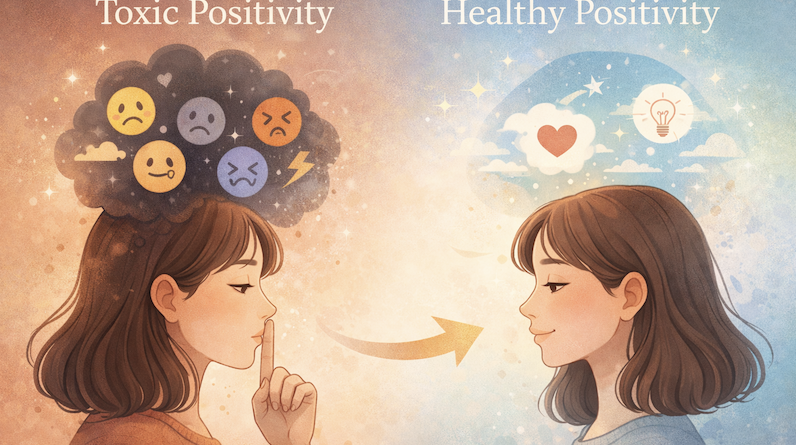
The Difference Between Toxic Positivity and Healthy Positivity
Healthy positivity allows space for pain while still offering hope.
| Toxic Positivity | Healthy Positivity |
|---|---|
| Denies emotions | Acknowledges emotions |
| Forces optimism | Allows emotional honesty |
| Avoids discomfort | Accepts discomfort |
| Silences struggle | Supports growth |
Healthy positivity doesn’t rush healing—it respects it.
How to Convert Toxic Positivity into Healthy Positivity
1. Acknowledge Emotions First
Before offering optimism, recognize what’s being felt. Saying “That sounds really hard” creates safety and trust.
2. Allow Emotions Without Judgment
Feelings are not good or bad—they are information. Allow sadness, anger, or frustration without trying to fix them immediately.
3. Use Compassionate Language
Replace phrases like “Stay positive” with “I’m here for you” or “It’s okay to feel this way.”
4. Find Meaning After Acceptance
Only after emotions are acknowledged does positivity become helpful. Growth often comes from reflection, not denial.
5. Practice Self-Compassion
Apply the same understanding to yourself. You don’t need to feel strong all the time to be resilient.
Why Balanced Positivity Leads to Emotional Strength
True positivity is not about constant happiness. It’s about emotional flexibility—the ability to move through difficult moments without being overwhelmed or suppressed.
When positivity is grounded in honesty:
- Emotional resilience improves
- Relationships feel safer
- Healing becomes sustainable
Final Thoughts
Toxic positivity asks us to hide parts of ourselves. Healthy positivity invites us to be whole. By allowing all emotions to exist, positivity becomes a source of strength instead of pressure.
Real positivity doesn’t ignore pain—it walks through it with compassion.