


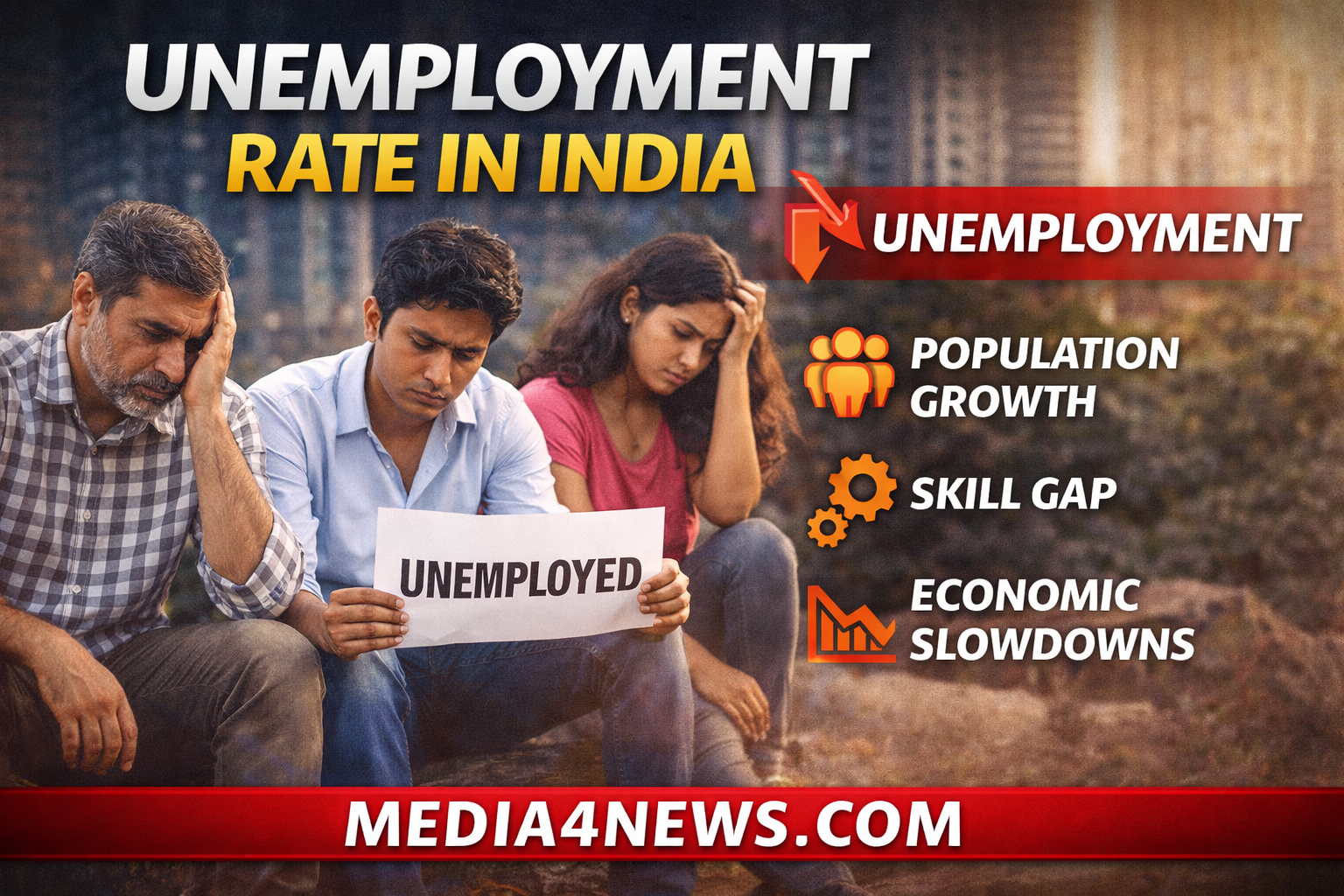
Unemployment Rate in India: Latest Trends, Causes, and Future Outlook
The unemployment rate in India is one of the most important indicators of the country’s economic health. It reflects the percentage of people who are willing to work but are unable to find suitable employment. In recent years, unemployment has been a major topic of discussion due to economic changes, population growth, and evolving job markets.
Understanding unemployment trends helps individuals, businesses, and policymakers make informed decisions.
What Is the Unemployment Rate?
The unemployment rate refers to the percentage of the labor force that is actively seeking work but unable to find jobs.
It is calculated using the formula:
Unemployment Rate = (Number of Unemployed People / Total Labor Force) × 100
This metric is used globally to assess economic performance.
Current Unemployment Rate in India
As of recent estimates, India’s unemployment rate has fluctuated between 6% and 8%, depending on factors such as seasonality, economic conditions, and data sources.
Key observations include:
- Urban unemployment is generally higher than rural unemployment
- Youth unemployment remains significantly higher than the national average
- Employment levels often vary based on education and skill levels
These variations highlight the complexity of India’s job market.
Key Causes of Unemployment in India
Several factors contribute to unemployment in India.
Population Growth
India has one of the largest populations in the world. The number of job seekers is growing faster than the number of available jobs.
Skill Gap
Many graduates lack industry-relevant skills, leading to a mismatch between job requirements and candidate qualifications.
Technological Changes
Automation and digital transformation are reducing the need for manual labor in certain sectors.
Economic Slowdowns
Periods of economic slowdown reduce hiring across industries, leading to increased unemployment.
Dependence on Agriculture
A large portion of India’s workforce depends on agriculture, which is seasonal and often leads to underemployment.
Impact of Unemployment
High unemployment can have several negative effects on society and the economy:
- Reduced income levels and purchasing power
- Increased poverty and inequality
- Mental health challenges among job seekers
- Slower economic growth
Addressing unemployment is essential for long-term economic stability.
Government Initiatives to Reduce Unemployment
The Indian government has launched several programs to boost employment:
Skill Development Programs
Initiatives like Skill India Mission aim to improve employability by providing job-oriented training.
Startup India
Encourages entrepreneurship and job creation through startups.
Make in India
Promotes manufacturing and aims to create large-scale employment opportunities.
Digital India
Supports job creation in the technology and digital sectors.
These initiatives focus on creating both direct and indirect employment opportunities.
Future Outlook
India’s employment landscape is expected to evolve with:
- Growth in the IT and digital sectors
- Expansion of the startup ecosystem
- Increasing demand for skilled professionals
- Rise of remote and gig economy jobs
While challenges remain, these trends indicate potential opportunities for job seekers.
How to Improve Employment Opportunities
To reduce unemployment, a combined effort is required:
- Improving education and skill training
- Encouraging entrepreneurship
- Supporting small and medium businesses
- Investing in infrastructure and industrial growth
These measures can help create sustainable job opportunities.
Conclusion
The unemployment rate in India remains a critical issue that requires continuous attention. While the country faces challenges such as population growth and skill gaps, ongoing reforms and emerging industries offer hope for improvement.
By focusing on skill development, innovation, and economic growth, India can create more job opportunities and strengthen its workforce in the coming years.