


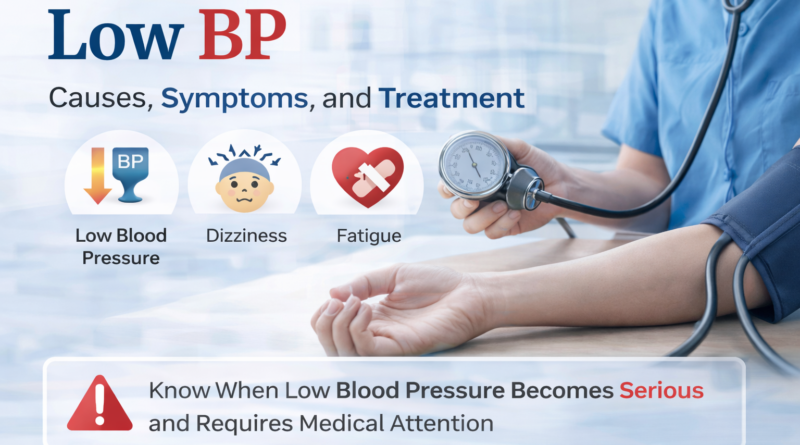
Low BP: Causes, Symptoms, and When to Worry
Blood pressure is a key indicator of your overall health. While high blood pressure often gets more attention, low BP (low blood pressure) can also cause health problems if it drops too far. Understanding the causes, symptoms, and treatment options for low blood pressure can help you manage it effectively and avoid complications.
What Is Low BP?
Low BP, medically known as hypotension, occurs when your blood pressure reading falls below the normal range. A typical healthy blood pressure reading is around 120/80 mmHg.
Low blood pressure is generally defined as:
- 90/60 mmHg or lower
For some people, low BP may not cause symptoms and can even be normal. However, if it leads to dizziness, fainting, or weakness, it requires attention.
Common Symptoms of Low BP
Low blood pressure becomes concerning when it reduces blood flow to vital organs like the brain and heart. Common symptoms include:
- Dizziness or lightheadedness
- Fainting (syncope)
- Blurred vision
- Nausea
- Fatigue
- Cold, clammy skin
- Rapid or shallow breathing
- Confusion (especially in older adults)
If symptoms are severe or sudden, medical help should be sought immediately.
Causes of Low BP
Low blood pressure can occur for several reasons. Some common causes include:
1. Dehydration
When your body loses more fluids than it takes in, blood volume decreases, leading to low BP.
2. Heart Problems
Conditions like slow heart rate, heart valve issues, or heart failure can reduce blood flow.
3. Endocrine Disorders
Hormonal problems such as thyroid disorders, adrenal insufficiency, or diabetes can cause hypotension.
4. Blood Loss
Significant blood loss from injury or internal bleeding lowers blood volume.
5. Medications
Certain medications, including diuretics, beta-blockers, antidepressants, and drugs for high blood pressure, can cause BP to drop too low.
6. Nutritional Deficiencies
Lack of vitamin B12 or folate can reduce red blood cell production, contributing to low BP.
Types of Low Blood Pressure
Low BP is not always the same. It can be categorized into different types:
- Orthostatic Hypotension: Sudden drop in BP when standing up.
- Postprandial Hypotension: Drop in BP after eating.
- Neurally Mediated Hypotension: Occurs after standing for long periods.
- Severe Hypotension (Shock): Life-threatening condition due to infection, trauma, or severe blood loss.
How Is Low BP Diagnosed?
Doctors diagnose low BP using:
- Blood pressure monitoring
- Blood tests
- ECG (Electrocardiogram)
- Echocardiogram
- Tilt-table test (to assess orthostatic hypotension)
Accurate diagnosis helps identify the underlying cause and guide treatment.
Treatment for Low BP
Treatment depends on the cause and severity of symptoms.
Lifestyle Changes
- Drink plenty of fluids
- Increase salt intake (only if advised by a doctor)
- Eat small, frequent meals
- Avoid sudden position changes
- Wear compression stockings
Medical Treatment
If lifestyle changes are not enough, doctors may prescribe medications to raise blood pressure or treat the underlying condition.
When Should You See a Doctor?
Seek medical attention if you experience:
- Frequent fainting
- Severe dizziness
- Chest pain
- Shortness of breath
- Signs of shock (rapid pulse, confusion, cold skin)
Early evaluation can prevent serious complications.
Final Thoughts
Low BP is not always dangerous, but it should not be ignored if it causes symptoms. Staying hydrated, maintaining a balanced diet, and monitoring your blood pressure regularly can help manage the condition effectively.
If you notice persistent symptoms, consult a healthcare professional for proper diagnosis and treatment. Monitoring your blood pressure is a simple step that can protect your long-term health.