


Stubble Burning in Punjab and Haryana 2026: Why Farm Fires Are Back in the News
Every year, as the paddy harvesting season begins in northern India, stubble burning in Punjab and Haryana returns to the headlines.
The issue is particularly important during September, October and November. Farmers have a short period to clear paddy fields before sowing the next crop, especially wheat. Burning leftover crop residue is a quick way to prepare the land, but the smoke adds particulate matter and other pollutants to the atmosphere.
The 2026 season has now begun. Punjab recorded its first stubble-burning incidents in mid-September, while authorities are introducing drone surveillance and other measures to identify farm fires more quickly.
So, why does stubble burning continue, what are Punjab and Haryana doing in 2026, and how can it affect air quality in Delhi-NCR?
What Is Stubble Burning?
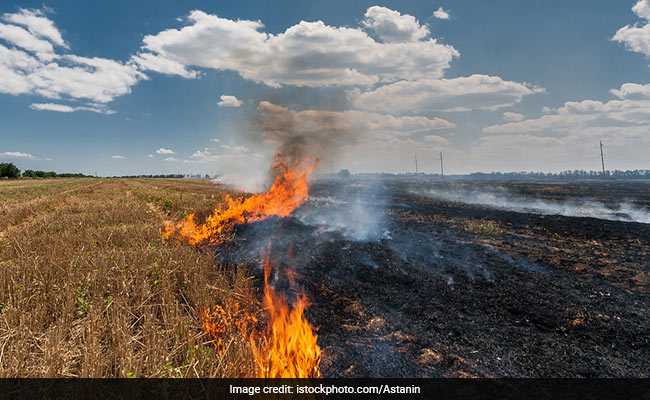
Stubble burning is the practice of setting fire to crop residue left in agricultural fields after harvesting.
When paddy is harvested using combine harvesters, stalks and other crop residue remain in the field.
Farmers need to prepare the same land for the next crop. Because the gap between paddy harvesting and wheat sowing can be short, some farmers burn the residue instead of removing or managing it mechanically.
The fire can clear a field quickly.
However, burning crop residue releases smoke and particulate matter into the atmosphere.
Why Is Stubble Burning Common in Punjab and Haryana?
Punjab and Haryana are among India’s major agricultural states and produce large quantities of paddy and wheat.
The challenge occurs during the transition between the two crops.
After harvesting paddy, farmers need to prepare their fields for wheat sowing. Removing, transporting or processing large quantities of crop residue can require additional machinery, labour, time and money.
For some farmers, burning therefore remains the quickest method of clearing the field.
The problem is not simply about awareness. The economics and logistics of crop-residue management also influence farmers’ decisions.
Has Stubble Burning Started in Punjab in 2026?
Yes.
Punjab began recording farm-fire incidents in September 2026.
Two incidents were reported in Tarn Taran district on September 15. Reports a few days later indicated five stubble-burning cases had been recorded over two days.
However, the main paddy harvesting period is still ahead.
Harvesting is expected to gain momentum during October, meaning September’s early incidents should not be interpreted as representing the entire 2026 season.
Punjab Recorded Fewer Farm Fires in 2025
There has been progress in reducing recorded incidents.
Punjab recorded 5,114 stubble-burning cases in 2025, compared with 10,909 in 2024, according to reporting on the state’s preparations for the new season.
That represented a decline of roughly 54%.
However, counting individual fires does not always provide a complete picture of how much land has burned or how intense a fire was.
That issue is becoming particularly important in 2026.
How Will Stubble Burning Be Monitored in 2026?
Authorities are expanding monitoring beyond conventional satellite fire detection.
The Commission for Air Quality Management (CAQM) has directed Punjab and Haryana to use drones for real-time monitoring of stubble-burning hotspots.
Satellite monitoring remains useful because it can cover very large areas.
However, authorities have also encountered differences between satellite estimates and ground-level assessments of burned areas. CAQM and the National Remote Sensing Centre are therefore re-evaluating the protocol used to assess burned agricultural land during the 2026 Kharif season.
This means authorities are increasingly looking beyond a simple count of detected fires.
What Is the New Red Entry Proposal?
Another major development in 2026 concerns the so-called red entry system.
On September 16, the Centre notified revised draft rules dealing with crop-residue burning.
Under the draft framework, a red entry relating to a stubble-burning violation could remain in a farmer’s land records for 15 months. Continued violations or unpaid environmental compensation could extend the period.
A red entry can have practical consequences because it may affect access to certain agricultural benefits, subsidies or credit.
However, there is an important detail: these are draft rules.
The government has invited public feedback for two months. Therefore, the new draft framework is not expected to become enforceable during the current paddy-burning season.
Why Is the Red Entry Proposal Controversial?
Farmer organizations have argued that penalties alone do not solve the underlying economic problem.
They have called for greater financial support to help farmers manage crop residue without burning it.
Punjab Chief Minister Bhagwant Mann has also opposed criminal action against farmers for stubble burning and called for financial incentives instead. In September, he proposed support of around ₹1,500 per acre for residue management.
This highlights the central disagreement around stubble-burning policy.
One approach focuses on stronger enforcement and penalties. Another focuses more heavily on incentives, machinery and making alternative residue-management methods economically viable.
Does Stubble Burning Cause Delhi Air Pollution?
Stubble burning contributes to air pollution in northern India, but it should not be described as the only cause of Delhi-NCR’s pollution.
Air pollution has many sources.
WHO identifies common outdoor sources including traffic and transportation, industrial activities, power plants, construction, waste burning and fires or agricultural fields.
Delhi-NCR also has local sources such as road dust, vehicles, industry, construction and waste burning.
Therefore, it would be inaccurate to say that Punjab and Haryana farmers alone cause Delhi’s winter air-pollution problem.
Why Can Farm Fires Still Have a Major Impact?
The contribution from crop-residue burning can vary significantly from one day to another.
Wind direction, wind speed, temperature and other atmospheric conditions determine where smoke travels and how pollutants disperse.
When large numbers of fires occur at the same time and weather conditions carry smoke toward Delhi-NCR, their contribution can rise sharply.
This is one reason the stubble-burning discussion becomes particularly important during October and November.
What Is PM2.5?
One of the biggest health concerns associated with smoke is PM2.5.
PM2.5 refers to fine particulate matter with a diameter of 2.5 micrometres or smaller.
These particles are small enough to penetrate deep into the lungs. WHO notes that particulate matter can also enter the bloodstream and is associated with cardiovascular and respiratory health effects.
This is why an apparently hazy or smoky day can be more than a visibility problem.
How Can Stubble Be Managed Without Burning?
Several alternatives are available.
Happy Seeder and Super Seeder
Specialized agricultural machinery can help farmers sow wheat while managing paddy residue in the field.
Mulching
Crop residue can be chopped and incorporated into or left on the soil rather than burned.
Making Bales
Straw can be collected into bales for transport and potential use elsewhere.
Biomass and Energy Uses
Agricultural residue can potentially be used as a raw material for biomass energy, pellets and other industrial applications.
Crop Diversification
Reducing dependence on crop combinations that create a very narrow harvesting and sowing window can also form part of a longer-term solution.
There are already farmers demonstrating alternatives. For example, farmers in Punjab’s Barnala district have reportedly avoided stubble burning for six years by combining crop diversification with machinery and residue-management practices.
What Can People Do During High-Pollution Days?
People living in affected regions should follow current air-quality information rather than assuming every hazy day has the same level of risk.
Check the AQI before planning long periods of strenuous outdoor activity.
When particulate pollution becomes very high, reducing unnecessary outdoor exposure can lower the amount of pollution you inhale.
If exposure cannot reasonably be avoided, an appropriately certified and well-fitting particulate respirator can help reduce exposure to particles.
For a detailed explanation, read our AQI Levels Meaning Chart: What Is a Good or Bad Air Quality Index?
You can also read How to Protect Your Lungs From Air Pollution: 10 Practical Tips.
What Happens Next?
The real test for the 2026 stubble-burning season will come as paddy harvesting accelerates.
Punjab and Haryana are introducing more monitoring, while authorities are also reconsidering how farm-fire intensity and burned areas should be measured.
At the same time, debate continues over whether enforcement or financial incentives are the most effective way to reduce burning.
The number of fires, the area burned and weather conditions during October and November will all influence the air-quality impact.
Frequently Asked Questions
What is stubble burning?
Stubble burning means burning crop residue left in fields after harvesting to prepare the land for the next crop.
Why do farmers burn stubble?
The gap between harvesting paddy and sowing wheat can be short. Burning provides a fast and inexpensive way to clear residue, although alternative management methods are available.
Has stubble burning started in Punjab in 2026?
Yes. Early incidents were recorded in Punjab in September, although the main paddy harvesting period is still ahead.
Does stubble burning cause Delhi pollution?
It contributes to Delhi-NCR pollution during certain periods, but it is not the only source. Vehicles, industry, construction, dust, waste burning and other sources also contribute.
How is stubble burning being monitored in 2026?
Authorities are using satellite observations and expanding real-time drone monitoring in Punjab and Haryana.
Can crop residue be managed without burning?
Yes. Alternatives include mulching, Happy Seeder and Super Seeder machinery, straw baling, biomass use and other residue-management methods.
Conclusion
Stubble burning in Punjab and Haryana is returning to attention as the 2026 paddy harvest begins.
Punjab has already reported early farm-fire incidents, while authorities are preparing drone surveillance and improved monitoring for the main harvesting season.
At the same time, the issue cannot be reduced to blaming farmers or treating crop burning as the sole cause of Delhi-NCR pollution.
Reducing stubble burning requires practical alternatives, affordable machinery, viable uses for crop residue, farmer participation and effective enforcement.
The coming weeks will show whether the decline in recorded Punjab farm fires seen in 2025 can continue through the 2026 season.